

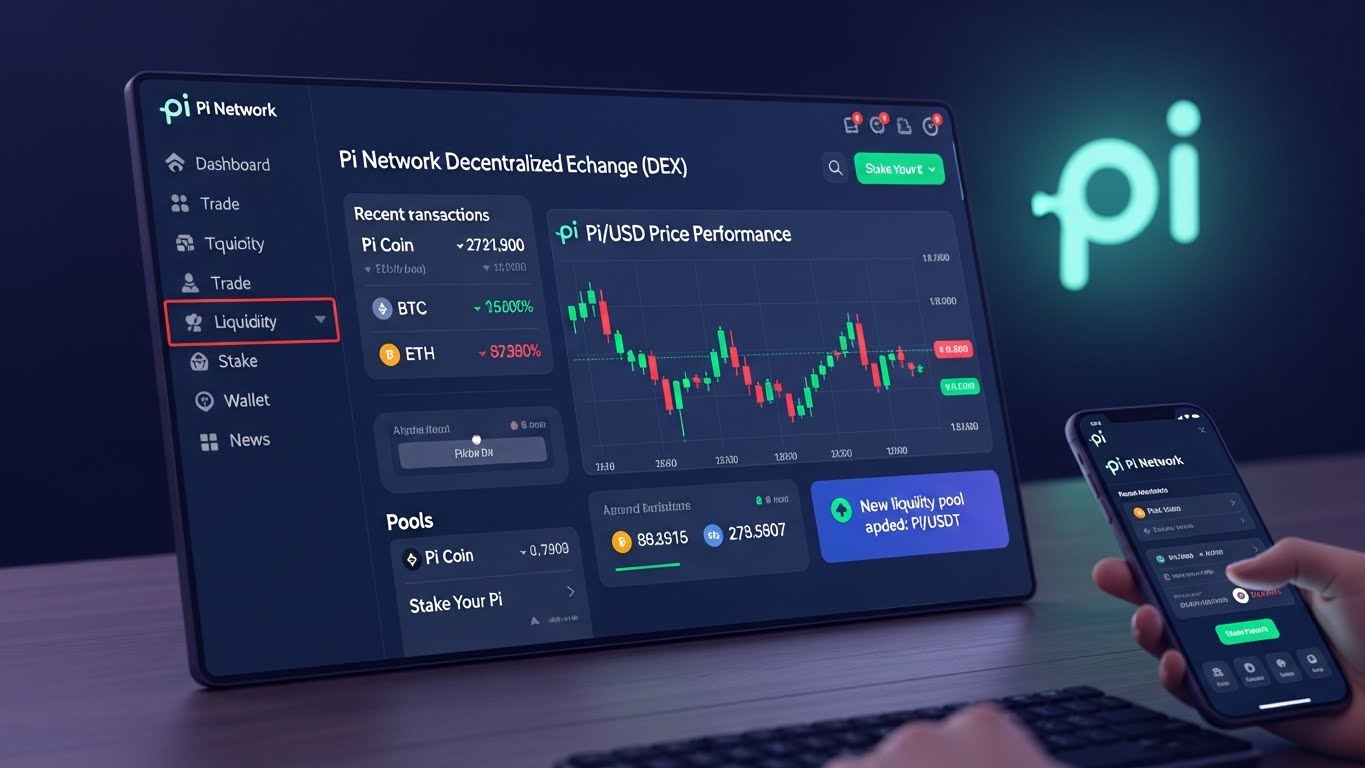
The cryptocurrency industry has long promised a future where digital assets are not just speculative instruments but functional tools for everyday commerce. While many blockchain projects focus on price movements and technical upgrades, only a few attempt to bridge the gap between crypto ownership and real-world usage. The latest Pi Network DEX update represents one of those rare moments where infrastructure, community, and commerce align to signal a meaningful shift in the crypto narrative.
Pi Network has built its reputation around accessibility, mobile-first mining, and a vision of mass adoption. With millions of engaged users worldwide, the project has always emphasized utility over hype. Now, with the introduction of decentralized exchange functionality, automated market maker liquidity pools, and a large-scale holiday commerce event, Pi Network appears to be entering a new phase of maturity. This update is not just a technical improvement but a strategic step toward building a self-sustaining digital economy.
This article explores the Pi Network DEX update in depth, examining how AMM liquidity pools work within the ecosystem, why the holiday commerce event matters, and how these developments could redefine Pi Network’s role in the broader crypto landscape. By analyzing the implications for users, developers, merchants, and the wider market, it becomes clear that this update may mark the beginning of a new era in crypto utility and adoption.
Understanding the Pi Network Vision and Evolution
Pi Network’s Focus on Mass Adoption
From its inception, Pi Network positioned itself differently from traditional cryptocurrencies. Instead of relying on expensive mining hardware, Pi Network introduced mobile mining, allowing everyday users to participate without technical barriers. This approach prioritized inclusivity and community growth, laying the foundation for a large and diverse user base.
Over time, the project evolved beyond simple mining. The focus shifted toward building an ecosystem where Pi could be used for goods, services, and decentralized applications. The Pi Network DEX update fits squarely within this long-term vision, as it provides the missing infrastructure needed for seamless value exchange within the network.
Transition Toward a Utility-Driven Ecosystem
Many crypto projects struggle to move beyond theoretical use cases. Pi Network, however, has consistently emphasized real-world utility. The introduction of a decentralized exchange and commerce-focused initiatives demonstrates a clear commitment to transforming Pi from a mined asset into a functional digital currency. This transition is supported by Pi Network ecosystem growth, which includes developers building applications, merchants experimenting with Pi payments, and users actively engaging in test transactions. The DEX update strengthens these efforts by enabling transparent and decentralized value exchange.
Pi Network DEX Update Explained

What the DEX Means for Pi Network
A decentralized exchange, or DEX, allows users to trade digital assets without relying on centralized intermediaries. In the context of Pi Network, the DEX serves as a core financial layer that supports peer-to-peer transactions, liquidity provision, and price discovery.
The Pi Network DEX update introduces a framework where users can interact directly with the network’s economy. This reduces reliance on external platforms and aligns with the principles of decentralization and user sovereignty. By embedding the DEX into the ecosystem, Pi Network enhances trust, transparency, and accessibility.
Integration with the Existing Pi Ecosystem
The DEX is not a standalone feature but an integrated component of the broader Pi Network infrastructure. It complements existing wallets, applications, and merchant tools, creating a cohesive experience for users. This integration ensures that trading, spending, and earning Pi can occur seamlessly within the same environment. Such cohesion is critical for mainstream adoption. When users can move between holding, trading, and spending without friction, the perceived value of the network increases significantly. This is a key reason why the Pi Network DEX update has attracted widespread attention.
AMM Liquidity Pools and Their Role
How Automated Market Makers Work
Automated market makers, or AMMs, are a cornerstone of modern decentralized finance. Instead of matching buyers and sellers through order books, AMMs use liquidity pools and algorithms to facilitate trades. Users provide pairs of assets to these pools and earn fees in return for supplying liquidity. Within Pi Network, AMM liquidity pools enable continuous trading and price stability. This mechanism ensures that users can exchange Pi and other supported assets at any time, without waiting for counterparties. The introduction of AMMs represents a major step toward a fully functional decentralized economy.
Benefits of AMM Liquidity Pools for Pi Network
The inclusion of AMM liquidity pools brings several advantages. First, it enhances liquidity, making it easier for users to trade Pi without significant price slippage. Second, it incentivizes participation by allowing users to earn rewards for contributing liquidity. Third, it supports decentralized price discovery, reducing dependence on external valuation mechanisms.
These benefits collectively strengthen the Pi Network DEX and encourage active engagement from the community. Liquidity providers become stakeholders in the ecosystem’s success, aligning individual incentives with network growth.
Strengthening Decentralization Through the DEX
Reducing Reliance on Centralized Platforms
One of the persistent challenges in crypto adoption is reliance on centralized exchanges. While convenient, these platforms introduce counterparty risk, custody issues, and regulatory vulnerabilities. By developing its own DEX, Pi Network reduces exposure to these risks and reinforces its decentralized ethos. The Pi Network DEX update empowers users to retain control over their assets while participating in the network’s economy. This aligns with broader trends in decentralized finance innovation, where user ownership and transparency are paramount.
Enhancing Trust and Transparency
Decentralization is not just a technical feature but a trust mechanism. When transactions and liquidity are governed by smart contracts, users can verify outcomes without relying on intermediaries. This transparency builds confidence, particularly among users new to crypto. For Pi Network, which targets mainstream adoption, trust is essential. The DEX update demonstrates a commitment to open and verifiable systems, reinforcing the network’s credibility.
Holiday Commerce Event and Real-World Utility
Purpose of the Holiday Commerce Event
The holiday commerce event introduced alongside the DEX update serves a strategic purpose. It is designed to encourage users to spend Pi on real goods and services during a high-activity shopping period. This initiative transforms Pi from a digital balance into a practical medium of exchange.
By aligning the event with holidays, Pi Network taps into existing consumer behavior patterns. Users are more likely to experiment with Pi payments when they are already in a spending mindset, accelerating adoption and testing the network under real-world conditions.
Impact on Merchants and Users
For merchants, the holiday commerce event offers an opportunity to reach a large and engaged user base. Accepting Pi can attract new customers and position businesses as early adopters of innovative payment methods. For users, the event provides tangible proof of Pi’s utility, reinforcing confidence in the network. This focus on crypto commerce adoption distinguishes Pi Network from projects that prioritize trading over usage. By emphasizing spending and earning within the ecosystem, Pi Network strengthens its value proposition.
Economic Implications of the Pi Network DEX Update
Creating a Self-Sustaining Economy
A functional economy requires liquidity, exchange mechanisms, and active participants. The combination of the DEX, AMM liquidity pools, and commerce initiatives creates the conditions for a self-sustaining Pi economy. Users can earn Pi, trade it, provide liquidity, and spend it without leaving the network. This closed-loop system reduces dependency on external markets and fosters internal economic activity. Over time, such an economy can become more resilient and less susceptible to external volatility.
Incentives for Long-Term Participation
The DEX update introduces new incentive structures. Liquidity providers earn rewards, merchants gain access to new customers, and users benefit from increased utility. These incentives encourage long-term participation rather than short-term speculation. By aligning incentives across stakeholders, Pi Network strengthens community engagement and supports sustainable growth. This approach reflects a mature understanding of token utility and economics.
Developer Opportunities and Ecosystem Growth
Expanding the Application Layer
The availability of a DEX and liquidity infrastructure opens new possibilities for developers. Applications can integrate trading, payments, and financial services directly into their platforms. This expands the scope of what can be built on Pi Network. As developers experiment with new use cases, the ecosystem becomes more diverse and dynamic. This innovation cycle is essential for maintaining relevance in a competitive crypto landscape.
Encouraging Innovation and Experimentation
The Pi Network DEX update lowers barriers for experimentation. Developers and entrepreneurs can test ideas without relying on centralized infrastructure. This freedom encourages creativity and accelerates the discovery of viable applications. Over time, successful experiments can evolve into core ecosystem components, further enhancing the network’s value.
Broader Implications for the Crypto Industry
A Shift Toward Utility-Focused Development
The Pi Network DEX update reflects a broader shift in the crypto industry toward utility-focused development. As markets mature, projects are increasingly judged by their ability to deliver real-world value rather than speculative returns. By prioritizing commerce, liquidity, and user experience, Pi Network sets an example for how crypto projects can move beyond hype. This approach may influence other networks to adopt similar strategies.
Bridging the Gap Between Crypto and Everyday Life
One of the biggest challenges facing crypto adoption is integration into everyday life. The combination of decentralized exchange infrastructure and commerce events brings crypto closer to daily use. This bridge is essential for achieving mainstream adoption. Pi Network’s efforts highlight how thoughtful design and community engagement can make crypto more accessible and practical.
Challenges and Considerations Ahead
Ensuring Scalability and Performance
As usage increases, scalability becomes critical. The Pi Network DEX must handle growing transaction volumes without compromising performance. Continuous optimization and testing will be necessary to maintain a smooth user experience. Addressing scalability challenges proactively will be key to sustaining growth and adoption.
Balancing Regulation and Decentralization
As Pi Network expands its economic footprint, regulatory considerations will become more prominent. Balancing compliance with decentralization principles is a complex task. Transparent governance and open communication will play an important role in navigating this landscape. Successfully managing these challenges can further enhance trust and legitimacy.
Conclusion
The Pi Network DEX update marks a significant milestone in the project’s evolution. By introducing AMM liquidity pools and launching a holiday commerce event, Pi Network demonstrates a clear commitment to building a functional, decentralized, and utility-driven ecosystem. These developments strengthen liquidity, encourage real-world usage, and align incentives across users, merchants, and developers.
More importantly, this update signals a broader shift toward practical crypto adoption. Instead of focusing solely on speculation, Pi Network emphasizes participation, commerce, and community-driven growth. If executed effectively, this strategy could position Pi Network as a leading example of how cryptocurrencies can integrate into everyday life. As the ecosystem continues to evolve, the success of the DEX and commerce initiatives will serve as a critical indicator of Pi Network’s long-term potential. For now, the update stands as a promising step toward a new era in crypto, defined not by hype, but by utility and real-world impact.
FAQs
Q: What makes the Pi Network DEX update significant compared to other crypto exchanges?
The Pi Network DEX update is significant because it is deeply integrated into a large, user-focused ecosystem. Unlike standalone exchanges, it connects directly with wallets, applications, and commerce initiatives, making it easier for users to trade and spend Pi within the same environment.
Q: How do AMM liquidity pools benefit everyday Pi Network users?
AMM liquidity pools improve trading efficiency and availability. Users can exchange assets at any time without relying on traditional buyers and sellers. Additionally, users who provide liquidity can earn rewards, creating an incentive to participate actively in the network’s economy.
Q: Why is the holiday commerce event important for Pi Network adoption?
The holiday commerce event encourages real-world spending of Pi during a high-activity period. This helps users experience Pi as a practical payment method rather than just a digital balance, reinforcing trust and demonstrating real utility.
Q: Can the Pi Network DEX help reduce reliance on centralized exchanges?
Yes, the DEX allows users to trade assets directly within the Pi ecosystem without transferring funds to centralized platforms. This reduces counterparty risk, enhances transparency, and supports the principles of decentralization.
Q: What does this update mean for the long-term future of Pi Network?
The update lays the groundwork for a self-sustaining digital economy. By combining decentralized exchange functionality, liquidity incentives, and commerce initiatives, Pi Network strengthens its utility and positions itself for long-term growth and mainstream adoption.
