

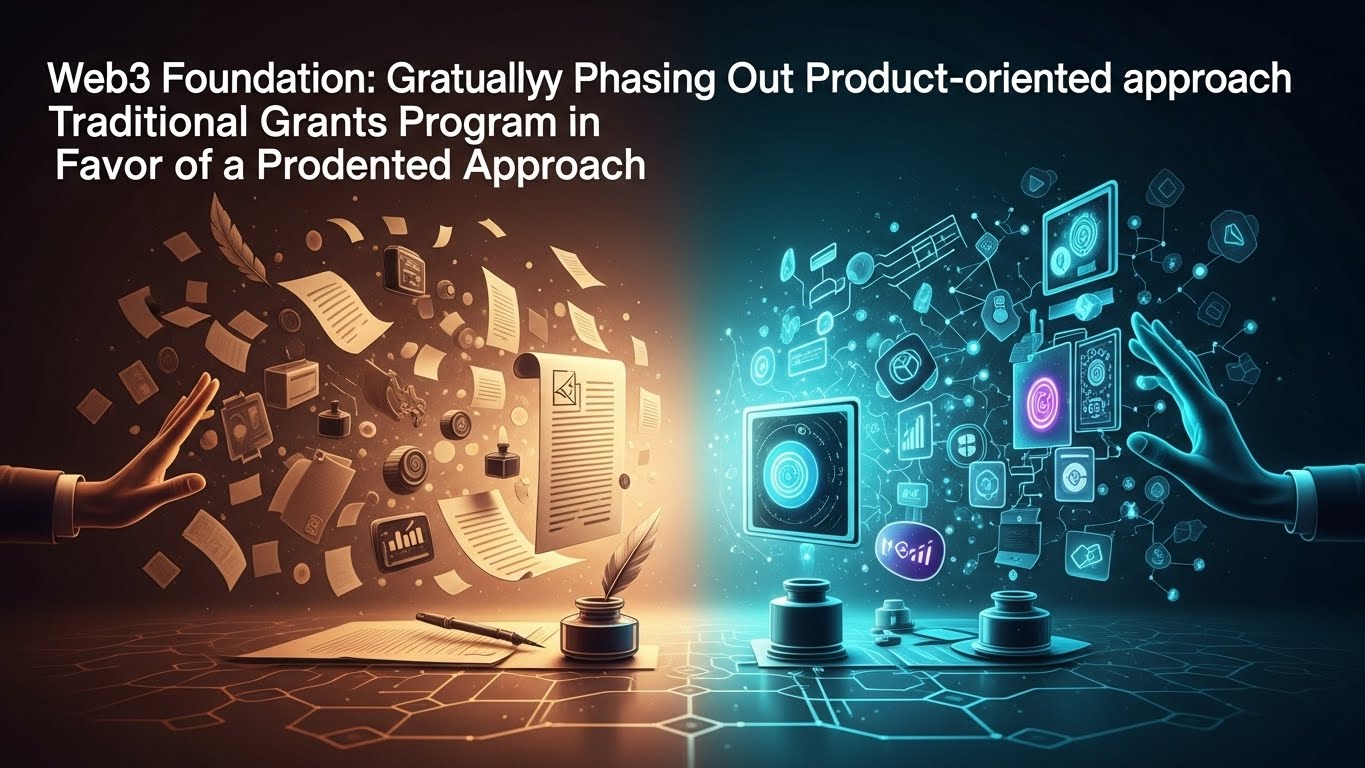
Web3 Foundation has long been associated with ecosystem funding for Polkadot and related technology. For years, the idea behind the traditional Open Grants model was straightforward: fund technically strong teams, support open-source development, and grow the ecosystem through transparent, milestone-driven delivery. That approach helped bootstrap tooling, libraries, research, wallets, integrations, and infrastructure—especially when the ecosystem needed raw building blocks more than polished end-user products.
But the Web3 landscape has changed. Competition is tougher, user expectations are higher, and ecosystems are increasingly judged not only by how much they build, but by what users actually adopt. In that context, Web3 Foundation’s gradual shift toward a product-oriented approach signals a broader maturity phase: funding is evolving from “build more components” to “ship products that people use, maintain, and grow.”
This doesn’t mean technical rigor is suddenly less important. If anything, it’s becoming more important—because products at scale require reliability, security, documentation, and long-term maintenance. What is changing is the lens through which funding decisions are made. Instead of prioritizing a broad set of open grant applications, product-oriented funding emphasizes measurable outcomes, clear user value, and alignment with concrete ecosystem needs—often expressed through mechanisms like Requests for Proposals (RFPs) and targeted initiatives.
A product-oriented approach also reflects a real pain point across Web3: grants can unintentionally reward “grant-winning” behavior rather than “user-winning” behavior. Teams get good at writing proposals, but not always at shipping and sustaining products. By contrast, product funding tends to prefer teams that can show traction, testing, distribution strategy, and an execution plan that survives after grant money ends.
In this article, you’ll learn what this transition means, how it changes incentives for builders, how Web3 Foundation’s funding structure already points toward this direction, and what strategies increase your chances of support in a product-first environment—without sacrificing open-source values.
Understanding the Traditional Open Grants Model and What It Achieved
To understand the shift, it helps to understand what the traditional Open Grants model was designed to do. Historically, Web3 Foundation’s grants efforts emphasized transparent processes, milestone-based delivery, and a strong technical focus. The idea was to create a pipeline of ecosystem contributions that were verifiable, open, and useful across many projects—not just a single startup.
This model worked particularly well for foundational infrastructure. When a network needs SDKs, developer tools, libraries, documentation, and reference implementations, grants are a powerful way to fund public goods. They also lower the barrier for independent developers and small teams, since grants can finance work that venture capital typically won’t fund.
Over time, the program and its surrounding ecosystem created a massive footprint of funded work. Web3 Foundation’s grants portal highlights the scale of applications and funded projects, which underscores how central grants have been to ecosystem growth.
Why Traditional Grants Were a Fit for Early Ecosystem Building
Traditional grants thrive when the ecosystem’s biggest challenge is missing building blocks. In early phases, it’s rational to fund broad contributions because nobody can predict which tools will become essential. A wide grant funnel acts like an R&D engine: many experiments, many contributors, lots of learning.
The model also reinforced open-source norms. Web3 Foundation’s grant documentation stresses technical value to the ecosystem and emphasizes long-term roadmaps, maintenance expectations, and clarity about why the work matters.
Why Web3 Foundation Is Moving Toward a Product-Oriented Approach
The core reason a product-oriented approach is gaining ground is that ecosystems are increasingly competing on user outcomes. Developers matter, but users determine network effects. And users rarely care whether something was funded by a grant. They care whether it works, whether the onboarding is smooth, whether the UX makes sense, and whether the product solves a real problem.
A product-oriented approach naturally pushes funding toward measurable adoption. It values product-market fit, user retention, and real-world utility. It also changes how “success” is defined. Instead of success being “a milestone was delivered,” success becomes “a product shipped, users adopted it, and it can be maintained.”
This also aligns with the growing use of more targeted funding tools inside the ecosystem. Web3 Foundation’s ecosystem funding landscape includes structured mechanisms such as RFPs—where specific problems are identified and teams propose solutions—rather than purely open-ended proposals.
The Hidden Problem With Broad Open Grants: Output Without Adoption
A common grant trap is “output without adoption.” Teams deliver code, but the ecosystem doesn’t integrate it. Documentation is thin. UX is unclear. The repo becomes inactive. Nobody maintains it. From a grant perspective, the work was completed. From a product perspective, the work didn’t create durable value.
A product-oriented approach tries to prevent that by asking different questions upfront: Who is the user? What is the distribution plan? What does success look like after launch? How will maintenance work? These questions don’t replace technical standards; they complement them.
What “Product-Oriented Funding” Actually Means in Practice
A product-oriented approach doesn’t mean Web3 Foundation stops supporting open-source work. It means funding is increasingly structured around specific ecosystem needs and product outcomes, often using a mix of programs, pathways, and clearer fit criteria. In practice, product-oriented funding tends to look like these themes: targeted problem statements, stronger expectations around documentation and usability, clearer evaluation of long-term maintenance, and a tighter relationship between funding and ecosystem priorities. Web3 Foundation’s documentation already signals that projects are expected to demonstrate significance and value—whether that’s through research impact, business analysis, or community adoption evidence.
RFPs as a Product-Focused Funding Tool
RFPs are one of the clearest expressions of a product-oriented approach because they start with an identified need. Instead of asking builders to guess what matters, an RFP defines a problem the ecosystem wants solved and invites proposals. The Web3 Foundation grants documentation describes RFPs as focused declarations of interest around specific projects that are useful and currently missing or unsolved. This shifts the builder mindset from “what can I build?” to “what should exist, and how do I build it well?”
Milestone Delivery That Serves a Shipping Product
Milestones remain useful, but in a product-oriented approach, milestones are judged more heavily on whether they create a usable product rather than just a code artifact. Web3 Foundation’s process emphasizes milestone delivery and structured review pathways, reinforcing that funding is tied to deliverables and accountability. In a product model, milestones often become more user-facing: usability improvements, beta releases, integration readiness, security reviews, documentation completeness, and onboarding quality.
How This Shift Changes What Gets Funded in the Polkadot Ecosystem
When funding becomes more product-oriented, some categories tend to rise in priority. That usually includes developer tooling that removes friction, apps that drive real user activity, UX upgrades that reduce complexity, and infrastructure that makes onboarding easier.
Web3 Foundation’s broader ecosystem support landscape also points to complementary initiatives beyond classic grants, including bounties and ecosystem support channels listed under its Funding & Support resources. This matters because it suggests funding is not disappearing; it’s becoming more diverse and more targeted. Builders may need to choose the right lane depending on the maturity of their idea.
From “Nice to Have” Tools to “Must-Have” Products
In open grant eras, “nice to have” tools can get funded because experimentation is valuable. In product-oriented funding, “must-have” tools win more often—especially those that solve known bottlenecks like onboarding, cross-chain UX, performance, reliability, and developer experience. This is where impact measurement becomes central. A product approach rewards evidence: users, integrations, usage metrics, and adoption signals.
What Builders Must Do Differently to Win Funding
If you’re applying for support in a product-oriented environment, your biggest upgrade is framing. You still need technical detail, but you also need product clarity. Instead of only describing what you will build, explain why it matters, who will use it, and how the ecosystem benefits in measurable ways. Web3 Foundation’s guidelines emphasize adding value to the Polkadot ecosystem, backed by evidence of significance and a compelling roadmap.
Show Proof, Not Just Potential
Product-oriented evaluators look for signs that you can execute. A prototype, a proof-of-concept, early integrations, alpha users, or prior shipped work can dramatically improve credibility. Even if your product is early, demonstrating momentum changes how your proposal is perceived.
Make Maintenance a First-Class Commitment
Traditional grants often struggle with the “what happens after payout?” problem. Product-oriented funding increasingly treats maintenance as part of the product. That means your plan should include how bugs get fixed, how releases happen, how documentation stays current, and what resources sustain the project.
What This Means for Open Source and Public Goods
A fear builders often have is that “product-oriented” means “startup-only” or “closed-source.” That doesn’t have to be true. A product approach can still fund public goods—if those public goods are designed as products with users.
The difference is that open source must behave like a product: clear onboarding, usable docs, versioned releases, strong defaults, and responsive maintenance. If your “public good” has no user journey, it won’t feel like a product, and it may struggle under product-oriented evaluation. Web3 Foundation’s grants approach continues to emphasize technical rigor and ecosystem value, which supports the idea that open-source public goods can still thrive—especially when they demonstrate adoption and long-term relevance.
A Healthier Incentive Model for Builders
The best version of this transition rewards builders who care about real impact, not just grant completion. It encourages teams to build things people use, not just things that look impressive in a repository. That can ultimately strengthen the ecosystem because it converts funding into adoption—turning resources into durable network effects.
Risks and Tradeoffs of Phasing Out Traditional Open Grants
No funding shift is purely positive. A product-oriented approach can create tradeoffs that Web3 Foundation—and the ecosystem—must manage carefully. One risk is that early-stage experimental work becomes harder to fund. Some innovations require long research timelines and may not show product traction quickly. Another risk is that product evaluation can accidentally favor teams with marketing polish over teams with deeper technical brilliance.
There’s also the risk of narrowing diversity. Open grants often bring in unconventional contributors. Product models can bias toward teams that already have resources, experience, or networks. That’s why the healthiest product-oriented approach still preserves pathways for research, early experimentation, and public goods—while increasing expectations for usability and adoption where appropriate.
The Future of Ecosystem Funding: A More Integrated Funding Stack
The direction of travel across Web3 is not “grants disappear,” but “funding becomes a stack.” That stack can include grants, RFPs, bounties, prizes, treasury funding, and ecosystem-led support—each suited to different stages and outcomes. Web3 Foundation’s Funding & Support landscape highlights multiple options in the Polkadot ecosystem, signaling that builders can pursue different routes depending on their project type and maturity. In a product-oriented world, the best builders will become fluent in choosing the right funding mechanism and shaping proposals around user impact and ecosystem priorities.
Conclusion: Why This Shift Can Strengthen Web3 Foundation’s Long-Term Impact
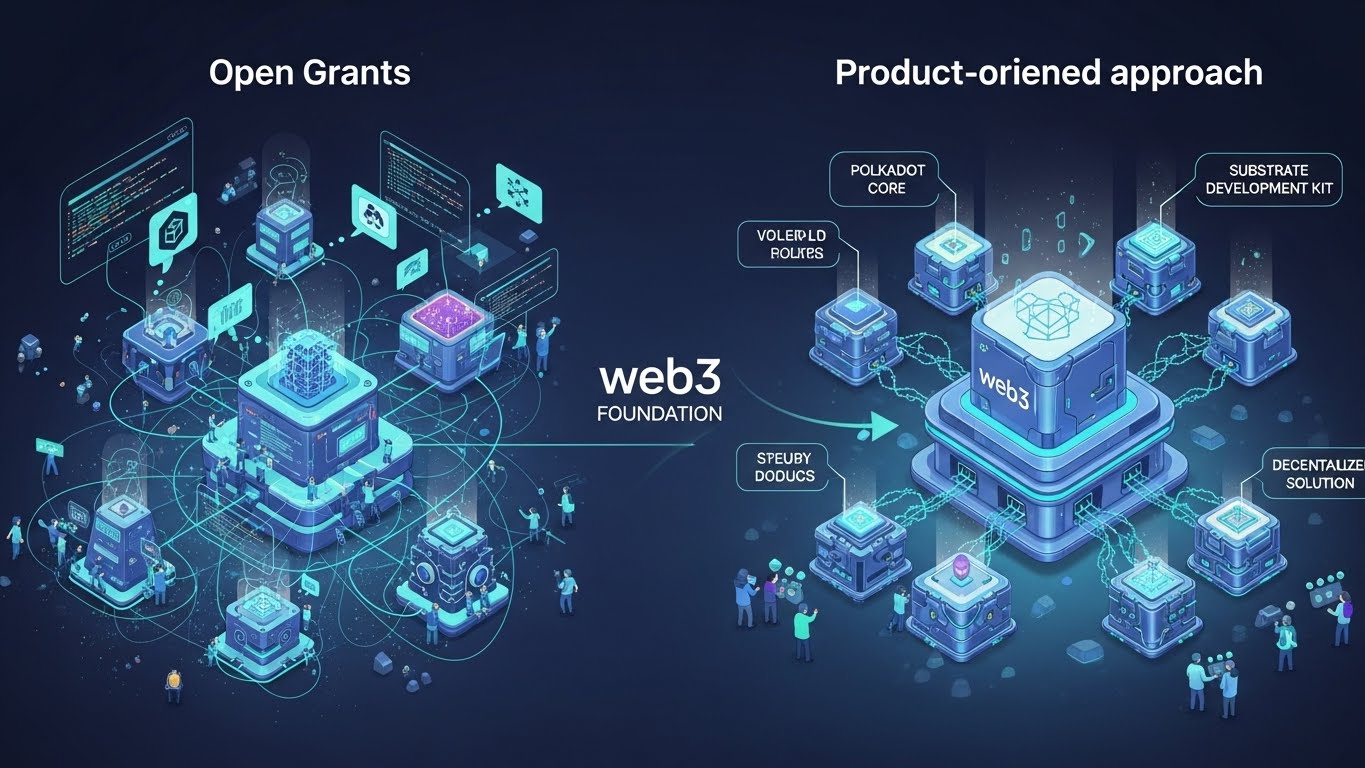
Web3 Foundation’s move toward a product-oriented approach reflects a maturing ecosystem that wants more than shipped code—it wants shipped value. Traditional open grants helped bootstrap foundational infrastructure, and that phase was essential. But as Web3 adoption becomes more competitive and user expectations rise, funding must increasingly translate into products that people actually use.
A product-oriented approach doesn’t need to abandon open-source ideals. It can elevate them by rewarding open-source work that behaves like a real product: easy to adopt, well-documented, maintained, and aligned with clear ecosystem needs. With tools like Requests for Proposals (RFPs) and clearer evaluation standards, funding can become more targeted, measurable, and accountable—while still supporting innovation.
For builders, the message is clear: keep technical excellence, but add product clarity. Show the user, the adoption path, and the maintenance plan. In the next era of ecosystem development, the teams that win won’t just build more—they’ll ship better.
FAQs
Q: Why is Web3 Foundation moving from traditional open grants to a product-oriented approach now, instead of keeping the old system forever?
A product-oriented approach becomes more important as ecosystems mature because the biggest bottleneck shifts from “not enough tools exist” to “users aren’t adopting what exists.” Web3 Foundation can fund a lot of code, but if that code doesn’t translate into usable products, the ecosystem doesn’t grow in real terms. A product-first model pushes funding toward outcomes like adoption, integration, usability, and long-term maintenance, which can create stronger network effects than a purely output-driven grant system.
Q: If traditional open grants are phased down, how can early-stage developers without traction still get support and credibility?
Even in a product-oriented environment, early-stage builders can compete by showing proof of execution rather than full market traction. A prototype, a working demo, a clear user journey, and a realistic go-to-market plan can substitute for large user numbers. Builders can also align with ecosystem-defined needs through Requests for Proposals (RFPs), which reduce guesswork and let teams prove they can solve a known problem rather than pitching a vague idea with uncertain demand.
Q: Does a product-oriented approach mean Web3 Foundation will stop supporting open-source public goods and only fund startups?
Not necessarily. Open-source public goods can still be funded if they are treated as products with users. That means clear documentation, onboarding, release processes, maintenance plans, and evidence that the ecosystem will actually adopt the work. Product-oriented funding often supports public goods more effectively because it forces clarity about who benefits and how the work remains useful after the grant period ends, instead of leaving strong code to decay without integration or stewardship.
Q: What changes should applicants make in their proposals to match Web3 Foundation’s product-oriented direction?
Applicants should go beyond describing technical features and explain the real-world problem, the target users, the adoption path, and what success looks like after launch. Strong proposals usually include a realistic roadmap, a distribution or integration plan, and an explicit maintenance strategy. In a product-oriented approach, reviewers want confidence that the work will be used and sustained, not just delivered once. Showing prior work, prototypes, or early integrations can significantly strengthen the application.
Q: What are the biggest risks of replacing traditional open grants with product-oriented funding, and how can the ecosystem balance them?
The biggest risks are reducing funding for experimental research, narrowing the diversity of contributors, and over-weighting short-term adoption metrics that can miss long-term breakthroughs. The ecosystem can balance these risks by maintaining multiple funding pathways: product-focused tracks for adoption-driven work, research tracks for longer-horizon innovation, and public-goods tracks with clear integration and maintenance requirements. The best outcome is a blended model where open exploration still exists, but product-quality accountability becomes the standard when projects aim for real users.
