


Unregistered crypto mining in Russia is moving from a gray-zone problem to a criminal-law priority, and the shift could be dramatic. If proposed legal changes advance as described by multiple reports, mining digital assets without registering with authorities may soon bring consequences that extend beyond fines and equipment confiscation. The headline that has captured attention—unregistered crypto mining in Russia may soon come with up to 2 years of forced labor—signals a tougher stance designed to push the country’s large but unevenly regulated mining sector into formal compliance.
This development matters because Russia is not a minor player in the global mining ecosystem. It holds substantial hash power, has regions with cheap electricity, and has seen rapid growth in industrial-scale operations. At the same time, unregistered crypto mining in Russia has been tied to electricity theft, pressure on local grids, and tax underreporting. Officials and regulators have repeatedly pointed to the scale of the shadow segment, arguing that voluntary compliance hasn’t been enough to curb abuses or stabilize energy consumption patterns. Recent reporting suggests the Ministry of Justice has proposed amendments to the Criminal Code that would introduce more severe penalties, including fines that can reach around 1.5 million rubles and an option of compulsory labor for up to two years. This proposal also references the possibility of prison terms for more serious cases.
The story is bigger than punishment alone. It reflects how governments are increasingly treating crypto mining not only as a technology issue, but as an energy governance issue, a fiscal issue, and a public-order issue. In Russia’s case, the state has already moved to legalize and regulate mining under specific conditions, requiring miners to register and comply with monitoring and tax rules. Yet a large share of miners may still be operating outside the official system, which is why enforcement-focused reforms keep returning to the policy agenda.
In this article, you’ll get a detailed, human-readable breakdown of what unregistered crypto mining in Russia means, why forced labor is being discussed as a penalty, what regulatory frameworks already exist, and how the proposed approach fits into Russia’s wider crackdown strategy. You’ll also learn what miners, hosting providers, investors, and even regional authorities should watch next as the policy environment evolves.
What “unregistered crypto mining in Russia” means in practice
Unregistered crypto mining in Russia generally refers to mining operations that fail to comply with the country’s formal requirements to register and report activities to the relevant authorities. While details can vary depending on whether the miner is an individual, a sole proprietor, or a legal entity, the core idea is the same: the state wants mining to be visible, measurable, and taxable.
Russia has taken steps to formalize the sector by requiring industrial-scale miners and legal entities to register, commonly linked to reporting obligations via the Federal Tax Service. Reporting from 2025 indicated that only a minority of miners had registered, with some estimates suggesting that around 70% remained outside formal reporting channels. That compliance gap is a major driver behind tougher proposals and enforcement mechanisms.
What complicates matters is that unregistered crypto mining in Russia is not limited to large industrial farms. It also includes smaller setups that expand quietly in residential or commercial spaces, sometimes with power consumption that strains local infrastructure. In certain regions, authorities have blamed unauthorized mining for localized power outages and grid instability, which brings energy ministries and regional governments into the regulatory conversation alongside tax and law enforcement bodies.
The link between mining, electricity theft, and grid pressure
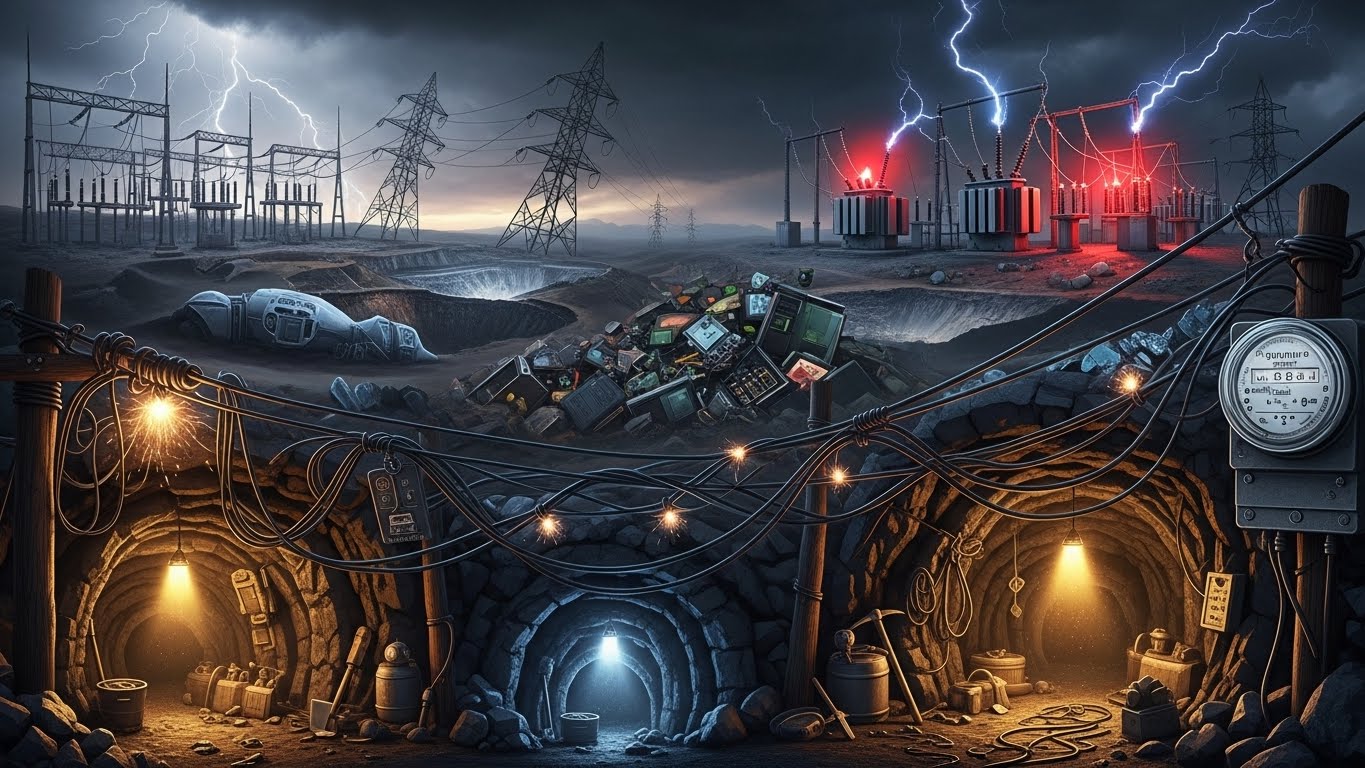
One reason unregistered crypto mining in Russia has become a priority is the energy footprint of proof-of-work mining. Mining rigs consume large amounts of electricity, and when operators tap into subsidized residential rates or bypass metering, the issue becomes politically sensitive. Reports about Russia’s registry and crackdown efforts consistently frame illegal or unregistered mining as a problem tied to energy theft and stress on regional power systems, not merely a tax concern.
This is why the state’s strategy has leaned toward both registration and enforcement. Authorities want to identify where mining is happening, how much electricity it consumes, and whether the activity is legal under local restrictions. In practice, that means unregistered crypto mining in Russia is increasingly treated as a risk to infrastructure reliability and energy planning.
Why Russia is tightening penalties now
The push for tougher penalties reflects a broader pattern: Russia is moving from regulatory creation to enforcement consolidation. After regulated mining frameworks began to take effect in late 2024, the next challenge became compliance. If a large share of miners remain unregistered, the state cannot fully tax the sector, cannot accurately forecast energy demand, and cannot reduce theft and grid overload.
In mid-2025, multiple reports described efforts to build national registries and expand enforcement tools to curb unregistered crypto mining in Russia. A key step was the development of mining equipment registries designed to help identify high-consumption sites and link activity to legal entities and responsible operators. These registries were framed as a response to widespread unauthorized operations and were supported by cooperation between ministries and tax agencies.
Now, reports indicate that the Ministry of Justice has proposed criminal penalties for unregistered crypto mining in Russia, including fines and compulsory labor for up to two years. This proposal has been described as amendments to Russia’s Criminal Code aimed at addressing mining that happens outside the registration system. It also references tougher outcomes in more serious circumstances, including potential imprisonment.
The proposed “forced labor” penalty and what it typically means
When people read “forced labor,” it can sound extreme, but in Russian legal terminology, the concept often aligns with compulsory labor as a criminal penalty. It is still a serious sanction, and its inclusion signals that authorities want deterrence strong enough to change behavior across the industry. The proposal reported by multiple outlets indicates that unregistered crypto mining in Russia could carry fines up to around 1.5 million rubles or up to two years of compulsory labor, with additional harsher penalties in certain cases.
The practical meaning is that the state is aiming to treat non-compliance not merely as an administrative violation, but as conduct that can trigger criminal liability. That shift changes the risk profile for miners, hosting providers, and anyone enabling unregistered operations.
Russia’s mining policy evolution since 2024
To understand why unregistered crypto mining in Russia is facing tougher penalties, it helps to look at the policy timeline. In 2024, Russia moved toward regulated mining by adopting laws that legalized and structured mining under government oversight, including conditions for legal entities and entrepreneurs. This framework was positioned as a way to harness the economic benefits of mining while controlling risks such as energy strain and illicit financial flows.
After those laws, Russia’s regulators and ministries continued building supporting mechanisms, including rules for reporting, tax compliance, and the ability to restrict or ban mining in certain regions when needed. Reports from 2024 also indicated that the government gained authority to prohibit mining in specific territories, reflecting concerns about power shortages and grid management.
In 2025, the enforcement phase became more visible through registry initiatives, inter-agency cooperation, and proposals for confiscation of mined crypto or equipment in certain cases. That sets the stage for today’s discussion: if unregistered crypto mining in Russia remains widespread despite these measures, lawmakers may shift toward criminal penalties to force compliance.
The national registry as a compliance and enforcement tool
A national mining registry is often described as a pivotal mechanism for Russia’s strategy. The registry is designed to monitor mining activity, connect operations to responsible entities, and detect anomalies in electricity usage. Reporting in 2025 described this registry as a tool for combating energy theft and tax evasion while improving transparency in regions with heavy mining activity.
This approach matters because it signals that the state isn’t relying only on occasional raids or reactive enforcement. Instead, it is building infrastructure to continuously detect and manage unregistered crypto mining in Russia, using energy data and administrative tracking as a baseline for regulation.
What penalties could look like for different types of miners
When criminal penalties enter the picture, the risk can vary by scale and intent. While details depend on the final legislation, enforcement trends suggest that authorities may distinguish between small-scale users operating at home and large-scale industrial or commercial operations that deliberately avoid registration.
For large farms, unregistered crypto mining in Russia may be treated as economic misconduct tied to electricity theft, tax evasion, and misuse of infrastructure. This is where equipment seizures, crypto confiscation, and criminal prosecution become most likely. For smaller miners, the risk may depend on electricity consumption thresholds, whether power is stolen, and whether the activity is repeated despite warnings or penalties.
The presence of compulsory labor in the proposed framework suggests a middle ground between a fine and imprisonment, aiming to punish and deter without necessarily filling prisons for every case. But it still marks a serious escalation compared to administrative fines alone.
Confiscation of mined cryptocurrency and equipment
Alongside forced labor proposals, earlier reporting described draft legislation or enforcement plans allowing courts to confiscate mining devices and unregistered cryptocurrencies. Confiscation is particularly powerful because it targets the economic payoff that drives mining in the first place.
For miners, this means unregistered crypto mining in Russia may carry risks that exceed the cost of compliance. If hardware worth millions of rubles and accumulated crypto can be seized, the business case for staying underground weakens significantly, especially for industrial operators.
The energy angle: why regions care as much as regulators
One of the most important drivers behind Russia’s approach is regional energy management. Mining is not evenly distributed. It tends to cluster where electricity is cheaper and infrastructure is accessible. That creates hotspots where unregistered crypto mining in Russia can overwhelm local grids.
Russia has already used regional restrictions and the authority to ban mining in specific territories, partly to prevent blackouts and stabilize supply. For regional governments and grid operators, the core concern is not ideology about crypto—it’s operational reliability. If unauthorized mining increases peak demand, causes transformer overloads, or forces costly upgrades, local residents and businesses feel the impact.
This is why criminal penalties may be framed as a public-interest measure. When policymakers argue for tougher action, they often emphasize that unregistered crypto mining in Russia is not just a private economic activity. It can be a public infrastructure burden.
Why energy theft has become a defining narrative
Energy theft is a powerful narrative because it is easy to communicate and politically resonant. It casts illegal mining as taking something from the public: subsidized electricity, grid stability, and taxpayer-funded infrastructure. Whether every unregistered operation involves theft is another question, but the policy direction suggests authorities see theft and underreporting as widespread enough to justify escalated enforcement.
As the state builds registry tools and proposes criminal sanctions, unregistered crypto mining in Russia is increasingly framed as comparable to other forms of economic wrongdoing rather than as a harmless hobby or innovation experiment.
How these rules may affect the Russian crypto industry

Tougher penalties could reshape the market in several ways. First, compliance rates may rise as miners register to avoid criminal risk. Second, the industry may consolidate, as smaller or less sophisticated operators either exit or partner with registered hosting providers. Third, investment in legal infrastructure may increase, including better metering, transparency tools, and formal accounting practices.
However, stricter enforcement can also create short-term disruptions. Operations may relocate, shut down, or pause. Regions with unstable power supplies may become less attractive. Some miners may seek jurisdictions with clearer or more favorable rules. This is the balancing act regulators face: maximize compliance and protect infrastructure without driving all activity underground or offshore.
Unregistered crypto mining in Russia being treated as a criminal offense would likely accelerate the shift toward industrial-scale, regulated mining, while discouraging informal setups. In the longer term, it may also push the sector toward more structured partnerships with energy providers and local authorities.
The role of sanctions and cross-border payments policy
Russia’s broader financial and geopolitical context also influences crypto policy. Earlier reporting noted that Russia has explored legal frameworks that allow the use of digital assets in cross-border settlements under controlled regimes. While this doesn’t directly excuse unregistered mining, it shows that the state is interested in crypto for strategic purposes.
That creates a dual-track approach: support certain regulated uses while cracking down on unregistered crypto mining in Russia that threatens energy systems or tax collection. The result is not “anti-crypto” across the board, but “state-controlled crypto,” with compliance as the entry ticket.
What miners and hosting providers should do next
For anyone involved in mining operations, the main takeaway is that the legal risk of non-compliance appears to be increasing. Even before any forced labor penalty becomes law, registry systems and enforcement coordination can raise detection likelihood. Miners should monitor regulatory updates, understand whether their activity qualifies as industrial-scale, and evaluate registration obligations and reporting requirements.
Hosting providers face heightened responsibility because they often operate at scale and can be easier targets for enforcement. If clients run unregistered operations within hosting facilities, the provider could face reputational risk and legal complications. In a crackdown scenario, authorities may focus on large, visible operators first. For investors and partners, risk assessments should include regulatory compliance. A mining venture that depends on low-cost electricity but does not build strong legal foundations becomes fragile under a policy shift toward criminal liability.
Compliance as a competitive advantage
In a world where unregistered crypto mining in Russia can trigger major penalties, compliance becomes more than a legal box to tick. It becomes a competitive advantage. Registered miners can access more stable relationships with energy suppliers, plan longer-term investments, and potentially avoid disruptions caused by raids or seizures. As enforcement strengthens, the industry may gradually split between regulated players and shadow operators. History suggests that shadow operators face rising costs, not falling costs, as detection and penalties intensify. That makes compliance the more sustainable strategy over time.
Global perspective: Russia is not alone in mining crackdowns
Russia’s crackdown fits into a global trend where governments are tightening oversight of mining due to energy concerns. In multiple regions worldwide, mining has triggered debates over electricity prices, grid stress, and environmental impacts. Some jurisdictions respond with bans, others with taxes, and others with licensing regimes.
What makes Russia’s case distinctive is the scale of mining activity and the state’s strong interest in controlling economic sectors. The proposal that unregistered crypto mining in Russia may soon come with up to 2 years of forced labor signals a deterrence approach rather than a purely market-based approach like higher tariffs. It also reflects the political urgency of enforcing registration in a sector that may be perceived as too large to remain informal. This global context matters because it suggests the future of mining regulation may depend less on whether crypto is accepted as a technology, and more on how governments manage energy demand, taxation, and infrastructure resilience.
Conclusion
Unregistered crypto mining in Russia is entering a new phase, where authorities appear ready to escalate from administrative penalties to criminal consequences. Reports indicate that the Ministry of Justice has proposed amendments introducing fines and up to two years of compulsory labor for mining conducted without registration, along with the possibility of harsher penalties in serious cases. This shift is closely tied to concerns about electricity theft, grid stability, and tax compliance, and it aligns with broader efforts such as mining equipment registries and regional restrictions.
For miners and crypto businesses, the message is clear: the cost of operating outside the official system may soon rise sharply. In a climate where unregistered crypto mining in Russia may soon come with up to 2 years of forced labor, compliance is not just safer—it may be the only viable long-term strategy. The sector is likely to consolidate, professionalize, and integrate more closely with state oversight, with increased transparency and enforcement defining the next chapter of mining in Russia.
FAQs
Q: What does “up to 2 years of forced labor” actually mean for unregistered crypto mining in Russia?
In the context of unregistered crypto mining in Russia, “up to 2 years of forced labor” is commonly reported as compulsory labor under proposed criminal-law amendments. This type of sentence typically means the offender may be required to perform state-assigned labor under supervised conditions rather than serve a traditional prison term, although the exact implementation depends on the final law and sentencing practice. The significance is that mining without registration would no longer be treated purely as an administrative issue; it would become a criminal offense with penalties severe enough to change behavior across the industry, especially for repeat offenders and industrial-scale operators.
Q: Why is Russia focusing so heavily on unregistered crypto mining instead of banning mining altogether?
Russia’s approach suggests it wants to control and benefit from mining rather than eliminate it. The state has allowed regulated mining frameworks and explored controlled use of digital assets for certain purposes, while simultaneously cracking down on unregistered crypto mining in Russia due to energy theft, tax underreporting, and stress on regional grids. A full ban would be difficult to enforce consistently and could push activity deeper underground. A regulated model, backed by registries and penalties, allows the government to capture tax revenue, monitor electricity consumption, and restrict mining in high-risk regions while still keeping the industry within a controllable system.
Q: How could the proposed penalties affect home-based miners and small-scale setups?
Home-based miners may not face the same enforcement intensity as industrial farms, but the risk depends on electricity use, local restrictions, and whether the activity violates registration rules. If a small operation consumes unusually high power, uses subsidized residential electricity inappropriately, or bypasses metering, it may be treated as unregistered crypto mining in Russia with higher enforcement priority. Even if penalties are aimed primarily at large offenders, the presence of criminal liability can still create fear and uncertainty for small miners, pushing many to reduce activity, shift to legal thresholds, or stop entirely.
Q: What is the role of registries in detecting unregistered crypto mining in Russia?
Registries are designed to improve visibility. A mining equipment registry can help authorities link mining hardware to responsible entities and detect abnormal electricity usage patterns. When combined with regional energy monitoring and tax reporting systems, registries make it harder for unregistered crypto mining in Russia to remain invisible for long periods. The main advantage for regulators is that enforcement becomes more systematic rather than purely reactive. Instead of relying only on tip-offs and raids, authorities can identify suspicious consumption patterns, cross-check them with registration data, and prioritize investigations.
Q: What steps can mining businesses take to reduce legal and operational risk in Russia going forward?
Mining businesses can reduce risk by prioritizing registration, accurate reporting, and strong energy compliance. This includes ensuring power contracts match actual consumption, implementing proper metering, documenting equipment ownership and hosting relationships, and maintaining transparent accounting practices. As unregistered crypto mining in Russia becomes a higher legal risk, businesses should also adopt compliance monitoring and legal review processes to stay aligned with changing rules. The goal is to shift from reactive survival to stable operation, because in an environment of criminal enforcement, the most resilient mining operations will be the ones that can demonstrate legality, transparency, and responsible energy use.
