

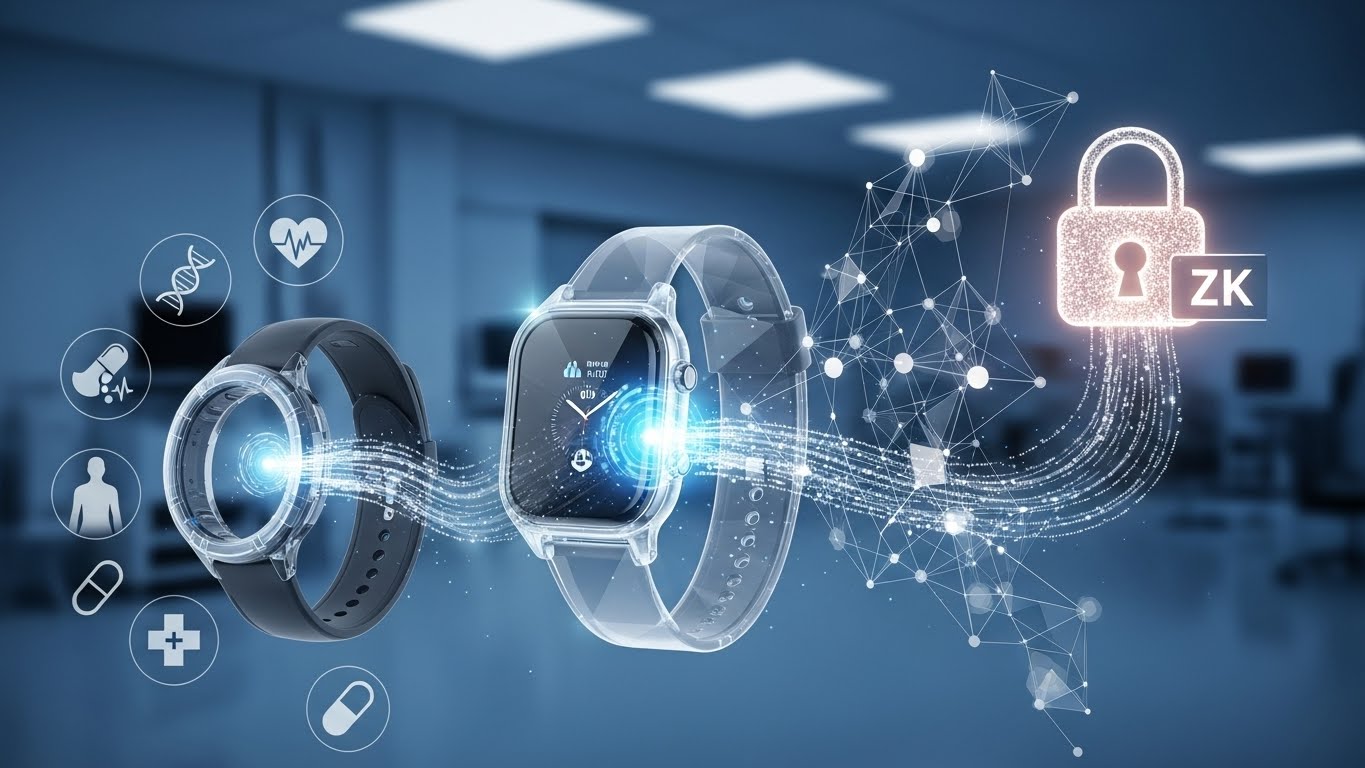
Wearable health technologies are moving from “fitness gadgets” to essential healthcare tools. Smartwatches, biosensors, patches, rings, and continuous monitoring devices now track heart rate, sleep, blood oxygen, glucose trends, stress levels, mobility patterns, and even early warning signals for disease risk. These devices promise something healthcare has always struggled to deliver at scale: personalized healthcare that adapts to your body, your behavior, and your environment in real time.
But this promise comes with a privacy paradox. Wearables generate extremely sensitive data—often more revealing than a medical record because it captures daily life continuously. This data is valuable for clinicians, insurers, researchers, and AI systems that can predict health events before symptoms appear. At the same time, it is vulnerable. Data leaks, identity exposure, unauthorized sharing, and re-identification are real concerns, and they become more serious as wearables integrate into hospitals, telemedicine platforms, and employer wellness programs.
That is where leveraging blockchain with zero knowledge proofs in wearable health technologies for personalized healthcare becomes a powerful solution. Blockchain can provide tamper-resistant records, auditability, and controlled data sharing. Zero knowledge proofs (ZKPs) add something even more important: the ability to prove a fact about health data without revealing the underlying data itself. In other words, you can verify claims like “this patient meets the clinical criteria,” “this device reading is authentic,” or “this person qualifies for a treatment plan” without exposing private biometric information.
When combined, blockchain and ZKPs create a privacy-preserving foundation for wearable health technologies. They can reduce data exposure, improve trust, enable secure interoperability, and make personalized healthcare more scalable. This isn’t about replacing doctors with blockchains or turning healthcare into speculative crypto hype. It’s about building systems that respect privacy by design while still letting health data flow where it needs to go.
Why Wearable Health Technologies Need a Stronger Privacy and Trust Model
Wearable health technologies collect and transmit data continuously, which makes them fundamentally different from traditional healthcare systems that store episodic records. A single wearable can produce thousands of data points per day, and these points can reveal patterns about pregnancy, mental health, heart disease risk, substance use, medication adherence, and lifestyle choices. The data is not just sensitive—it’s deeply personal.
At the same time, wearable health data is often fragmented. A person might use one device for sleep, another for exercise, and a medical-grade monitor for chronic care. Each device may store data in separate platforms, each with different policies, security models, and export capabilities. This fragmentation creates gaps in personalized healthcare because clinicians and care teams often cannot access the full picture reliably.
The biggest issues can be summarized as trust and privacy. People want the benefits of personalized healthcare, but they also want control over who sees their data and how it is used. They want proof that their readings were not modified. They want transparency about data sharing. And they want systems that don’t rely on a single company as the gatekeeper. This is precisely the space where leveraging blockchain with zero knowledge proofs in wearable health technologies for personalized healthcare offers a practical path forward.
The Limits of Traditional Databases in Wearable Healthcare
Most wearable health data is stored in centralized databases controlled by device manufacturers or third-party platforms. Centralization creates a single point of failure. If the database is breached, millions of user records can be exposed. Even if encrypted, metadata can still be revealing, and re-identification is often possible. Centralized models also create trust problems. Users may not know if data is shared with partners, insurers, or advertisers. Even when privacy policies exist, enforcement is difficult to verify.
Why Trust Matters as Wearables Become Medical Infrastructure
As wearables evolve from consumer devices into medical infrastructure, trust becomes mission-critical. Hospitals and regulators need confidence that data is authentic, unaltered, and traceable. Clinicians need to trust that readings are accurate and come from verified devices. Patients need assurance that their data won’t be exploited or leaked. Blockchain brings auditability and immutability. Zero knowledge proofs bring privacy and selective disclosure. Together, they can help wearable health technologies scale without sacrificing trust.
Understanding Blockchain in Wearable Health Technologies
Blockchain is best understood as a shared ledger that multiple parties can trust without needing a single central authority. Each entry is time-stamped, cryptographically linked, and extremely difficult to tamper with once confirmed. In wearable health technologies, blockchain is not used to store raw biometric data directly. That would be inefficient and potentially risky. Instead, blockchain is used to store proofs, references, permissions, and integrity checks.
The role of blockchain is to ensure that data access is controlled and traceable, and that the system can prove what happened, when it happened, and who authorized it. This is essential for secure health data sharing and for building reliable personalized healthcare pipelines.
How Blockchain Improves Data Integrity and Auditability
A major advantage of blockchain is data integrity. If wearable readings are stored off-chain (in encrypted cloud storage or secure data vaults), blockchain can store a cryptographic hash of those records. A hash is like a fingerprint of the data. If someone alters the data, the fingerprint changes, and the system can detect tampering instantly. Auditability is equally powerful. Blockchain can create a transparent log of access events: when a doctor requested access, when a patient approved it, and when a data set was used for research. This supports compliance and builds user trust.
The Role of Smart Contracts in Consent Management
Smart contracts are programmable rules that run on a blockchain. In wearable healthcare, smart contracts can manage consent automatically. A patient can define policies such as “my cardiologist can access heart rate trends for 30 days” or “researchers can use my anonymized sleep data only if it meets certain criteria.” The contract enforces this without requiring manual intervention. This model strengthens patient consent management by turning consent into a verifiable, enforceable process rather than a vague agreement buried in a platform’s terms and conditions.
What Zero Knowledge Proofs Are and Why They Matter for Healthcare

Zero knowledge proofs are a cryptographic method that allows one party to prove something is true without revealing the underlying information. This is revolutionary for healthcare because it reduces exposure of sensitive data while still enabling verification.
For example, a wearable device could prove that a person’s average resting heart rate exceeded a clinical threshold over the last two weeks without revealing the exact heart rate values. Or a patient could prove eligibility for a clinical trial without sharing their complete medical history. In personalized healthcare, this allows systems to provide tailored recommendations, insurance verification, or treatment eligibility checks while protecting privacy.
Zero Knowledge Proofs vs Traditional Data Sharing
Traditional health data sharing often works like this: if you want to verify something, you share the entire dataset. This creates unnecessary exposure. Zero knowledge proofs allow a different approach: share only what is needed to verify a claim. This is critical in wearable health technologies because the datasets are continuous and intimate. Most healthcare interactions do not need the raw feed. They need a summary, a threshold check, or a proof of compliance.
Why ZKPs Support Privacy-Preserving Healthcare
ZKPs directly strengthen privacy-preserving healthcare by enabling selective disclosure. Instead of trusting every party with raw data, the system provides cryptographic evidence of a fact. This reduces the risk of misuse, reduces data breach impact, and gives users more control. It also supports regulatory compliance because many privacy laws are based on data minimization principles: collect and share only what is necessary.
How Blockchain and Zero Knowledge Proofs Work Together in Wearable Health Systems
The real power comes from combining blockchain with zero knowledge proofs. Blockchain provides an immutable layer for storing proofs and permissions. ZKPs provide privacy-preserving verification. Together, they can create an end-to-end pipeline where wearable data remains encrypted, but its validity and usefulness can still be proven.
A typical architecture looks like this: wearable devices collect data, data is stored in encrypted form off-chain, blockchain stores hashes and access rules, and ZKPs allow verified computations on data without revealing it. This is not theoretical. It is increasingly feasible due to improvements in cryptographic systems, better mobile hardware, and emerging privacy-focused networks.
Verifiable Health Claims Without Revealing Health Data
One of the strongest use cases is verifiable health claims. A patient could prove that they meet a wellness program requirement, such as “10,000 steps per day for 30 days,” without revealing their exact activity patterns. A diabetic patient could prove they maintained glucose levels within a target range without sharing every reading. This protects privacy while still enabling incentives, personalized care plans, and medical verification.
Protecting Wearable Data from Re-Identification
Even “anonymized” health data can often be re-identified when combined with metadata such as location patterns and time stamps. ZKPs reduce this risk because they allow verification without releasing raw records. Blockchain helps by providing transparent access logs and enabling cryptographic verification that data access followed rules.
Key Use Cases for Personalized Healthcare
Leveraging blockchain with zero knowledge proofs in wearable health technologies for personalized healthcare is not a single application. It is a framework that unlocks multiple use cases, each addressing a major pain point in modern healthcare.
Remote Patient Monitoring With Trust and Privacy
Remote patient monitoring is one of the fastest-growing healthcare models. Wearables allow doctors to monitor chronic conditions without frequent clinic visits. But remote monitoring requires trust: clinicians need confidence that data is authentic and not manipulated. Blockchain can prove data integrity. ZKPs can prove clinical thresholds or alerts without revealing full datasets. This makes remote monitoring more scalable because it reduces privacy concerns and administrative burden.
Personalized Preventive Care and Early Detection
Wearables can identify early signals of disease risk, such as changes in heart rate variability, sleep disruption, or unusual activity patterns. Personalized healthcare depends on analyzing these signals and responding early. ZKPs can enable systems to compute risk scores or anomaly alerts without exposing sensitive raw data. Blockchain can store audit trails of when alerts were generated and how decisions were made, supporting transparency and accountability.
Clinical Trials and Research With Privacy Guarantees
Research needs data, but patients worry about privacy and misuse. ZKPs allow participants to prove eligibility and provide verified summaries without revealing identity or complete records. Blockchain can record consent and ensure data access follows agreed policies.
This can improve recruitment and data quality because participants may be more willing to share when privacy is guaranteed by design.
Insurance, Wellness Programs, and Fraud Prevention
Wearable data is increasingly used in wellness programs and insurance discounts. This creates a fraud problem because people can fake activity or manipulate readings. Blockchain-based identity and device verification can prevent fraud by ensuring the data came from trusted sensors. ZKPs can allow users to prove compliance with program requirements without revealing their entire lifestyle patterns, supporting fair incentives while protecting privacy.
Interoperability: Connecting Wearables, Hospitals, and Health Records Securely
Personalized healthcare requires interoperability. Wearables must integrate with electronic health records, telemedicine platforms, and hospital systems. Today, interoperability is often fragmented and slow. Blockchain can serve as a shared trust layer that coordinates permissions and data references across different systems. ZKPs can allow verification across systems without exposing data to every participant. This reduces the need for large data transfers and minimizes the risk of leaks.
Decentralized Identity for Patients and Devices
Identity is a major challenge. How do you verify that a wearable belongs to a specific patient, and that the patient is who they claim to be, without creating a surveillance system? This is where decentralized identity models become valuable. A patient can control their identity credentials, and ZKPs can prove identity attributes without revealing personal details. A device can have cryptographic credentials proving it is genuine and calibrated.
Secure Consent Across Multiple Providers
When a patient sees multiple doctors, consent becomes complicated. Blockchain-based consent systems allow permissions to be managed consistently across providers. Patients can grant, revoke, and time-limit access in a way that is transparent and verifiable. This is crucial for personalized healthcare because it enables continuous care without sacrificing control.
Challenges and Limitations: What Needs to Be Solved Before массов Adoption
Despite the promise, leveraging blockchain with zero knowledge proofs in wearable health technologies for personalized healthcare faces real challenges. These challenges are not reasons to dismiss the approach. They are engineering and policy problems that must be solved for adoption.
Scalability and Computational Overhead
ZKPs can be computationally intensive, especially when proving complex statements. Wearables have limited battery and processing capacity. Systems need efficient designs where heavy computation is done securely on edge devices or trusted compute environments, without weakening privacy. Blockchain scalability also matters. Healthcare systems generate huge event volumes. Blockchains used for audit logs and proof storage must handle high throughput, low latency, and predictable costs.
User Experience and Complexity
Patients and clinicians do not want to manage cryptographic keys manually. For adoption, privacy-preserving systems must feel effortless. Wallet-style key management must be simplified. Consent interfaces must be understandable. Recovery mechanisms must exist if a user loses access.
Regulatory and Compliance Considerations
Healthcare is heavily regulated. Systems must align with privacy laws, medical device regulations, and clinical governance rules. Blockchain’s immutability can conflict with “right to erasure” concepts unless designed carefully with off-chain storage and revocable access models. For personalized healthcare, compliance must be built into the architecture, not added later.
Data Accuracy and Sensor Reliability
Blockchain and ZKPs can prove data integrity, but they cannot guarantee the sensor is accurate. If a wearable produces faulty readings due to poor calibration or misuse, the system will still verify that those readings are “authentic” from that device. This is why device certification, calibration standards, and validation frameworks remain essential alongside cryptographic tools.
The Future: What Wearable Health Might Look Like With ZKP-Blockchain Systems

If these technologies mature, wearable health could shift from platform-controlled ecosystems to user-controlled data economies. Patients would carry cryptographic health credentials they can share selectively. Hospitals would verify claims without storing unnecessary data. AI systems could personalize recommendations while preserving privacy.
In that world, personalized healthcare becomes more scalable because privacy concerns no longer block data sharing. Trust becomes programmable. Consent becomes real, not symbolic. And wearable health technologies can integrate into mainstream care without creating surveillance capitalism. This future also supports innovation. Developers can build new applications because data sharing becomes standardized and privacy-preserving. Researchers can access verified insights without exposing identities. Patients can benefit from more precise healthcare while retaining control.
Conclusion
Leveraging blockchain with zero knowledge proofs in wearable health technologies for personalized healthcare addresses one of the biggest challenges in modern medicine: how to use sensitive data to deliver better care without sacrificing privacy and trust. Wearables create unprecedented opportunities for early detection, remote monitoring, and individualized treatment. But they also create unprecedented privacy risks.
Blockchain strengthens integrity, auditability, and consent enforcement. Zero knowledge proofs enable verification without disclosure, supporting privacy-preserving healthcare at scale. Together, they create a practical framework for secure data sharing, interoperable systems, and personalized healthcare that respects user autonomy.
The path forward is not without challenges. Scalability, user experience, regulation, and device reliability must be solved. But the direction is clear. As wearables become core healthcare infrastructure, privacy-preserving technology will become a requirement, not a luxury. Blockchain with ZKPs is one of the most promising approaches to making that future real.
FAQs
Q: How does leveraging blockchain with zero knowledge proofs in wearable health technologies improve patient privacy compared to normal apps?
Traditional wearable health apps often rely on centralized platforms where raw biometric data is stored, processed, and sometimes shared with partners. This creates exposure risk because large datasets can be breached or misused, and users cannot always verify how data is handled. Leveraging blockchain with zero knowledge proofs in wearable health technologies improves privacy by keeping raw data encrypted off-chain while using blockchain to store integrity checks and consent records. Zero knowledge proofs then allow verification of health claims, thresholds, or eligibility without revealing the underlying personal data, reducing the amount of sensitive information that leaves the patient’s control.
Q: Can zero knowledge proofs actually support personalized healthcare if doctors cannot see the full dataset?
Yes, because personalized healthcare often requires specific facts or patterns, not always the entire raw stream. Zero knowledge proofs can verify meaningful clinical information such as whether a patient’s heart rate exceeded a threshold, whether medication adherence was consistent, or whether sleep quality fell below a risk level. Doctors can still request access to raw data when necessary through consent mechanisms, but ZKPs allow many decisions to be made using privacy-preserving summaries. This reduces unnecessary data sharing while still supporting tailored treatment plans and early warning systems.
Q: What role does blockchain play if wearable health data is not stored directly on the blockchain?
Blockchain acts as a trusted coordination layer rather than a storage warehouse. In wearable health systems, blockchain can store cryptographic hashes of records, audit logs of access requests, and smart contract rules for consent. This creates strong data integrity because any tampering with off-chain records can be detected instantly. It also creates transparency because access and consent events can be verified. When combined with zero knowledge proofs, blockchain provides the trusted ledger where proofs and permissions can be recorded without exposing sensitive health information.
Q: What are the biggest practical challenges to implementing blockchain and zero knowledge proofs in real wearable health products?
The largest challenges are scalability, computational cost, user experience, and regulatory compliance. Zero knowledge proofs can be resource-intensive, and wearable devices have limited battery and processing power, so efficient architectures are required. Blockchain systems must handle high transaction volumes and keep costs predictable. Users must not be forced to manage complex cryptographic keys without recovery options. Finally, healthcare regulations require careful design, especially around data deletion rights, consent management, and medical device validation. These challenges are solvable, but they require engineering maturity and strong governance models.
Q: Will blockchain and zero knowledge proofs replace electronic health records, or will they integrate with them?
They are more likely to integrate than replace. Electronic health records are deeply embedded in hospital workflows, billing systems, and regulatory frameworks. Blockchain and zero knowledge proofs can strengthen these systems by adding a privacy-preserving layer for consent, verification, and interoperability. Wearable health data can remain encrypted in secure storage while EHRs access verified insights, alerts, or consented records when needed. This integration approach supports personalized healthcare by connecting wearable insights to clinical care without forcing hospitals to rebuild their entire data infrastructure.
