

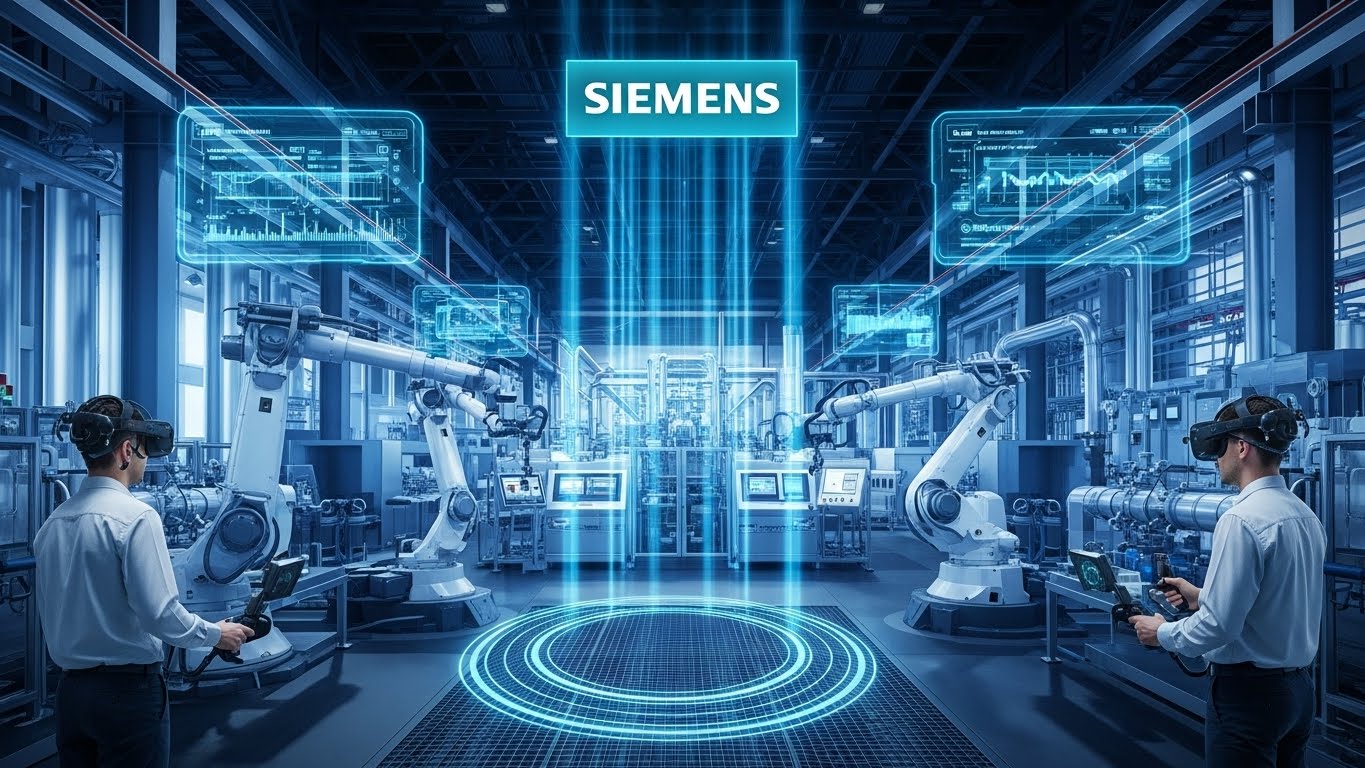
The concept of the Industrial Metaverse has rapidly moved from theoretical discussion to practical implementation, and Siemens is positioning itself at the center of this transformation. With the announcement of its new solution designed to build Industrial Metaverse environments at scale, Siemens is redefining how industries design, simulate, operate, and optimize complex systems. This development marks a significant shift in how digital transformation is approached across manufacturing, energy, infrastructure, and industrial automation sectors.
The Industrial Metaverse goes beyond immersive visuals or virtual replicas. It represents a convergence of digital twins, real-time data, advanced simulation, artificial intelligence, and automation into a unified, interactive environment. Siemens’ new solution addresses one of the biggest challenges industries face today: scaling these environments reliably, securely, and efficiently across global operations.
As companies seek greater resilience, sustainability, and productivity, the ability to simulate entire factories, supply chains, and infrastructure systems in a persistent digital space is becoming essential. This article explores how Siemens’ new solution enables Industrial Metaverse environments at scale, why it matters for modern industry, and how it could reshape the future of industrial operations.
Understanding the Industrial Metaverse Concept
Beyond virtual reality and visualization
The Industrial Metaverse is often misunderstood as an extension of virtual reality. In reality, it is a data-driven, physics-based digital ecosystem that mirrors real-world industrial processes. Siemens’ approach emphasizes accuracy, interoperability, and real-time synchronization rather than entertainment or purely visual experiences.
In an Industrial Metaverse environment, machines, production lines, and entire facilities are represented as living digital entities. These entities continuously exchange data with their physical counterparts, enabling deeper insight and proactive decision-making.
The role of digital continuity
Digital continuity is the backbone of the Industrial Metaverse. Siemens has long advocated for seamless data flow across the product lifecycle, from design and engineering to production and operations. The new solution strengthens this continuity by integrating engineering models, operational data, and simulation tools into a single scalable environment. This continuity reduces silos, accelerates innovation, and ensures that decisions are based on a unified source of truth.
Why Scale Matters in the Industrial Metaverse
Moving from pilots to enterprise-wide deployment
Many companies have experimented with digital twins and virtual simulations, but scaling these initiatives has proven difficult. Pilot projects often succeed, yet fail to translate into enterprise-wide impact due to complexity, cost, or lack of integration. Siemens’ new solution directly addresses this challenge by enabling Industrial Metaverse environments to scale across multiple sites, assets, and teams without losing fidelity or performance.
Managing complexity in global operations
Large industrial organizations operate across regions, each with unique regulatory, operational, and infrastructure requirements. A scalable Industrial Metaverse must handle this complexity while maintaining consistency and reliability. By focusing on modularity and interoperability, Siemens ensures that its solution adapts to diverse industrial contexts while maintaining a unified digital framework.
Core Capabilities of the New Siemens Solution
High-fidelity digital twins at scale
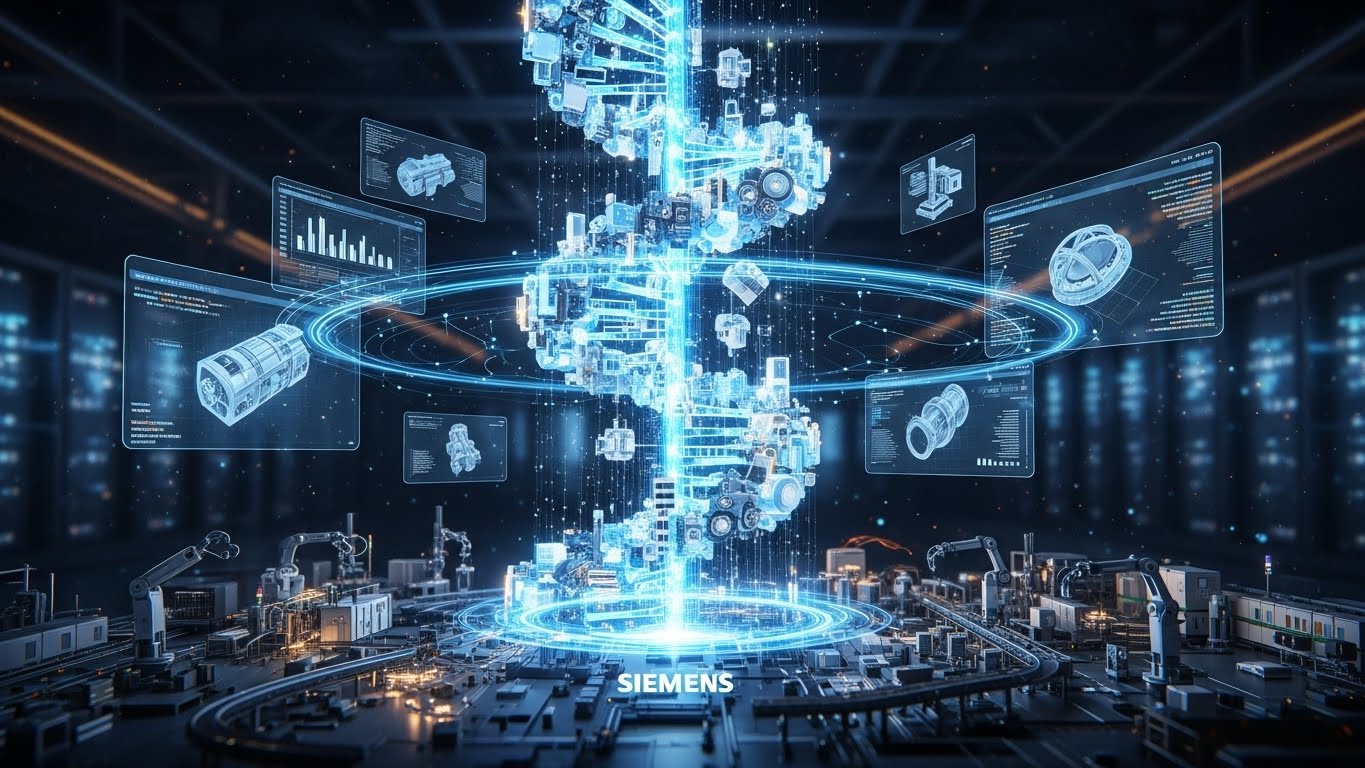
At the heart of Siemens’ solution lies advanced digital twin technology. These digital twins are not static models but dynamic representations that evolve with real-time data. The ability to deploy thousands of interconnected digital twins across factories, machines, and systems enables unprecedented visibility and control. This scalability transforms digital twins from isolated tools into enterprise-wide strategic assets.
Real-time data integration and synchronization
Industrial Metaverse environments require continuous data flow from sensors, control systems, and enterprise software. Siemens’ solution emphasizes robust data integration, ensuring real-time synchronization between physical and digital assets. This capability allows organizations to monitor performance, detect anomalies, and test scenarios in a live digital environment without disrupting operations.
Simulation and Optimization in the Industrial Metaverse
Predictive insights through advanced simulation
Simulation is a cornerstone of the Industrial Metaverse. Siemens’ solution enables large-scale simulation of processes, materials, and systems under various conditions. By running predictive simulations, companies can identify bottlenecks, optimize workflows, and anticipate failures before they occur. This proactive approach enhances operational efficiency and reduces downtime.
Supporting sustainable industrial transformation
Sustainability is increasingly central to industrial strategy. Through detailed simulation, organizations can model energy consumption, emissions, and resource usage within the Industrial Metaverse. Siemens’ scalable solution empowers companies to test sustainability initiatives virtually, ensuring environmental goals are met without compromising productivity.
Integration With Automation and Control Systems
Bridging IT and OT environments
One of the most significant challenges in industrial digitalization is integrating information technology and operational technology. Siemens’ new solution bridges this gap by connecting engineering models, automation systems, and enterprise software within the Industrial Metaverse. This integration enhances collaboration between engineering, operations, and management teams, aligning strategic goals with operational execution.
Enhancing operational decision-making
With real-time insights and simulation capabilities, decision-makers gain a deeper understanding of system behavior. The Industrial Metaverse becomes a decision-support environment where strategies can be tested and refined before implementation. This reduces risk and accelerates innovation across industrial operations.
Collaboration and Workforce Transformation
Redefining industrial collaboration
The Industrial Metaverse enables new forms of collaboration by allowing teams to interact within shared digital environments. Engineers, operators, and managers can explore the same digital twin, regardless of location. Siemens’ scalable solution supports this collaborative approach, breaking down geographical and organizational barriers.
Training and skills development
Workforce transformation is a critical component of industrial evolution. The Industrial Metaverse provides immersive training environments where employees can learn complex processes safely and efficiently. By simulating real-world scenarios, Siemens’ solution enhances skill development and reduces onboarding time for new workers.
Interoperability and Open Ecosystems
Avoiding vendor lock-in
Scalability depends on openness. Siemens emphasizes interoperability, ensuring that its Industrial Metaverse solution integrates with existing tools and platforms. This openness allows organizations to build ecosystems that evolve over time rather than being constrained by proprietary limitations.
Enabling ecosystem innovation
An open Industrial Metaverse encourages innovation by enabling third-party developers, partners, and customers to contribute new applications and services. Siemens’ approach supports a growing ecosystem that extends the value of the core platform.
Security and Trust in Scaled Industrial Metaverse Environments
Protecting critical industrial data
As Industrial Metaverse environments scale, security becomes paramount. Siemens incorporates robust cybersecurity measures to protect sensitive industrial data. This focus on security ensures that digital transformation does not introduce unacceptable risk.
Ensuring data integrity and reliability
Trust in the Industrial Metaverse depends on data accuracy and reliability. Siemens’ solution prioritizes data governance and validation, ensuring that digital representations accurately reflect physical reality. This trust is essential for informed decision-making.
Industry Applications and Use Cases
Manufacturing and smart factories
In manufacturing, the Industrial Metaverse enables virtual commissioning, process optimization, and continuous improvement. Siemens’ scalable solution supports smart factory initiatives by providing end-to-end visibility. Manufacturers can test new layouts, production schedules, and automation strategies before deployment.
Energy, infrastructure, and beyond
Beyond manufacturing, industries such as energy, transportation, and infrastructure benefit from scalable Industrial Metaverse environments. Complex systems can be simulated and optimized holistically, improving reliability and sustainability. Siemens’ solution adapts to diverse industrial contexts, demonstrating its broad applicability.
Competitive Advantage in the Industrial Metaverse Era
Accelerating innovation cycles
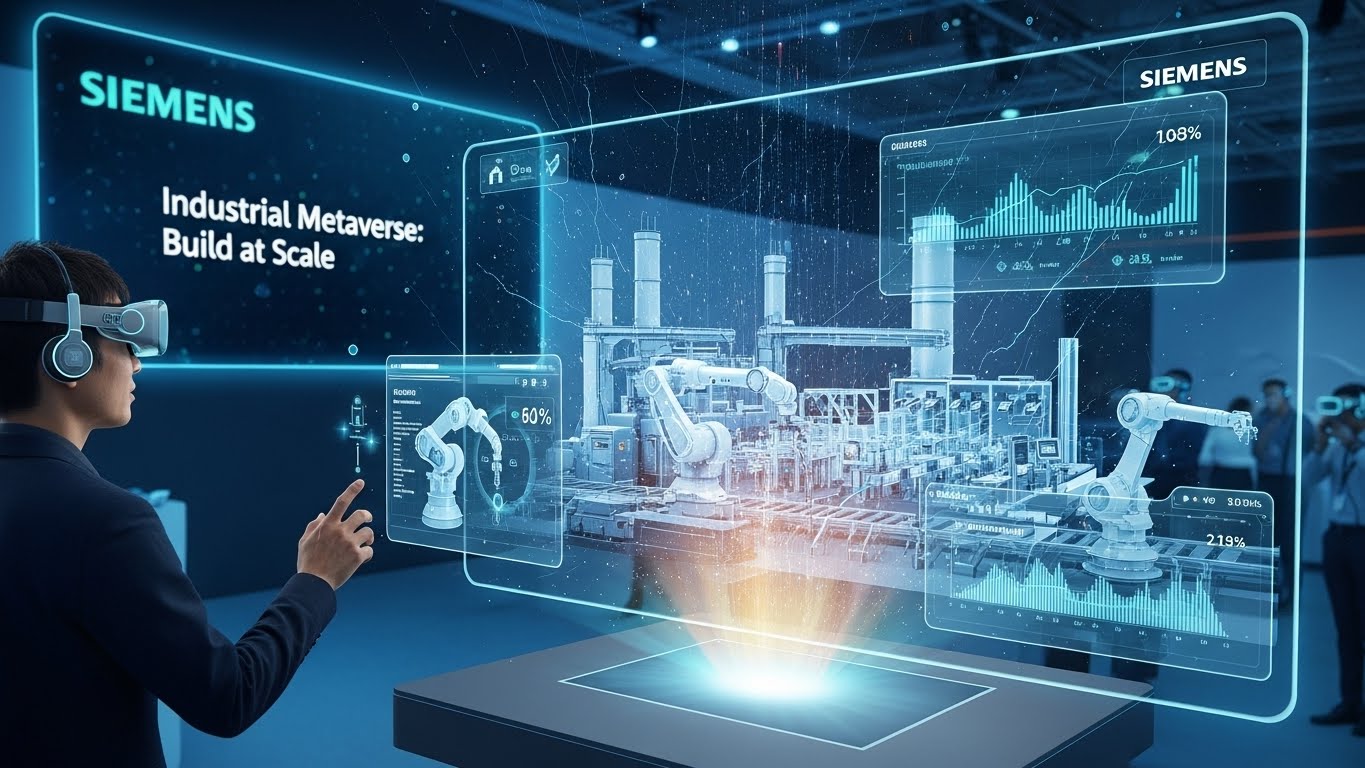
The ability to simulate, test, and refine ideas rapidly gives organizations a competitive edge. Siemens’ solution shortens innovation cycles by reducing reliance on physical prototypes. This agility is increasingly important in fast-changing industrial markets.
Building resilient operations
Resilience is a key outcome of Industrial Metaverse adoption. By anticipating disruptions and testing responses digitally, companies can strengthen operational continuity. Siemens’ scalable approach ensures resilience across entire industrial networks.
Challenges and Considerations in Adoption
Managing organizational change
Adopting the Industrial Metaverse requires cultural and organizational change. Siemens’ solution provides the technological foundation, but success also depends on leadership and workforce engagement. Clear strategy and training are essential for realizing full value.
Balancing investment and return
While scalable Industrial Metaverse environments offer long-term benefits, initial investment can be significant. Organizations must align adoption with strategic objectives to ensure positive returns. Siemens’ modular approach supports phased implementation, reducing risk.
The Future of Industrial Metaverse Development
From digital twins to digital ecosystems
The Industrial Metaverse represents a shift from isolated digital twins to interconnected digital ecosystems. Siemens’ solution accelerates this evolution by enabling scale and interoperability. As ecosystems grow, new opportunities for optimization and innovation emerge.
Siemens’ role in shaping industrial digitalization
With decades of experience in automation, software, and engineering, Siemens is uniquely positioned to lead the Industrial Metaverse transition. Its new solution reflects a long-term vision of digital transformation grounded in industrial reality.
Conclusion
The new Siemens solution that builds Industrial Metaverse environments at scale represents a significant milestone in industrial digitalization. By addressing scalability, interoperability, and real-time integration, Siemens is enabling organizations to move beyond isolated pilots toward enterprise-wide transformation. The Industrial Metaverse is no longer a distant concept but a practical framework for optimizing complex systems, enhancing collaboration, and driving sustainable growth.
As industries face increasing complexity and uncertainty, scalable digital environments offer a powerful way to innovate with confidence. Siemens’ approach positions the Industrial Metaverse as a strategic asset rather than a technological experiment, shaping the future of industrial operations in a connected, data-driven world.
FAQs
Q: What makes Siemens’ Industrial Metaverse solution different from traditional digital twin platforms?
Siemens’ solution focuses on building Industrial Metaverse environments at scale by integrating high-fidelity digital twins, real-time data, and simulation across entire enterprises rather than isolated assets.
Q: How does scalability impact the value of the Industrial Metaverse for large organizations?
Scalability allows organizations to deploy consistent digital environments across multiple sites and systems, enabling enterprise-wide optimization, collaboration, and decision-making.
Q: Can the Industrial Metaverse support sustainability and energy efficiency goals?
Yes, Siemens’ solution enables detailed simulation of energy use, emissions, and resource flows, helping organizations design and test sustainability initiatives before physical implementation.
Q: What role does workforce collaboration play in Industrial Metaverse adoption?
Collaboration is central to the Industrial Metaverse, allowing teams to interact within shared digital environments, improve communication, and enhance training and skills development.
Q: Is the Industrial Metaverse suitable only for manufacturing industries?
No, while manufacturing is a key use case, Siemens’ scalable Industrial Metaverse solution also applies to energy, infrastructure, transportation, and other complex industrial sectors.
