


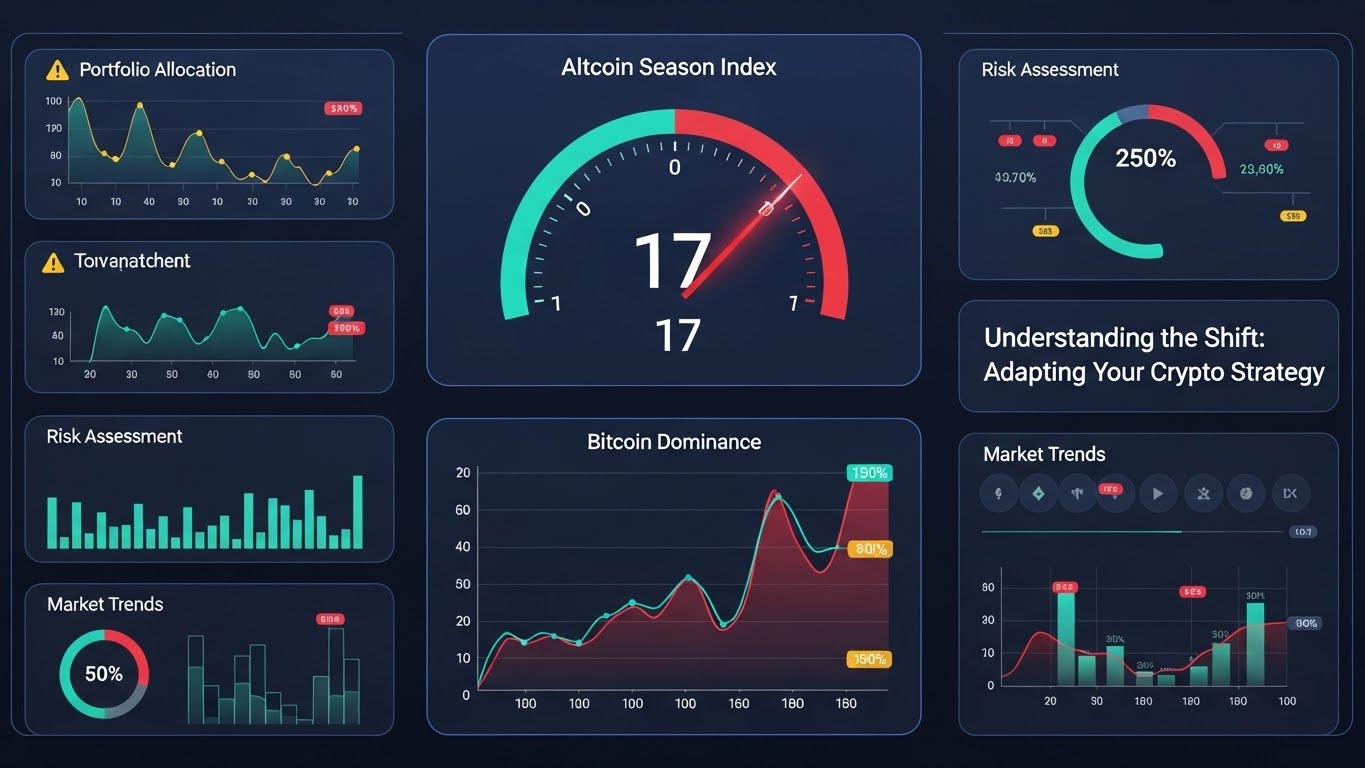
The cryptocurrency market moves in cycles, and few indicators capture investor sentiment as clearly as the Altcoin Season Index. When this index falls to low levels, it sends a powerful signal that capital is concentrated elsewhere. With the Altcoin Season Index stalled at 17, many investors are asking an uncomfortable question: is Bitcoin dominance quietly crushing altcoin-heavy portfolios? This concern is not just emotional but deeply rooted in market structure, liquidity flows, and historical behavior.
An index reading of 17 suggests that only a small fraction of altcoins are outperforming Bitcoin over a defined period. In practical terms, this means that despite innovation, narratives, and community enthusiasm, most alternative cryptocurrencies are lagging behind the market leader. For traders and long-term holders alike, this environment can feel frustrating, especially after periods where altcoins delivered explosive returns.
This article explores what it really means when the Altcoin Season Index stalls at such a low level, why Bitcoin dominance tends to rise in these phases, and how this dynamic can affect portfolio performance. By understanding market cycles, capital rotation, and investor psychology, you can better assess whether your portfolio is positioned for resilience or quietly losing ground.
Understanding the Altcoin Season Index
What the Altcoin Season Index Measures
The Altcoin Season Index is designed to measure whether altcoins are outperforming Bitcoin over a specific timeframe. When the index is high, it suggests that a majority of altcoins are delivering stronger returns than Bitcoin. When it is low, Bitcoin is clearly leading the market. A reading of 17 indicates that only a small percentage of altcoins have beaten Bitcoin’s performance.
For investors, this metric provides a snapshot of market conditions rather than a prediction. It reflects where capital is currently flowing and which assets are favored by market participants. Understanding this context is essential before making assumptions about future performance.
Why a Reading of 17 Matters
An index level of 17 is firmly in Bitcoin-dominant territory. Historically, such low readings often coincide with periods of uncertainty, macroeconomic stress, or anticipation of major market moves. In these moments, investors tend to prioritize perceived safety and liquidity, which Bitcoin offers more reliably than most altcoins.
This environment does not mean altcoins are obsolete, but it does suggest that timing and positioning become far more important. Investors heavily exposed to smaller assets may feel the pressure as capital concentrates elsewhere.
The Role of Bitcoin Dominance
Bitcoin dominance measures Bitcoin’s share of the total cryptocurrency market capitalization. When dominance rises, it indicates that Bitcoin is gaining value relative to the rest of the market. This does not always mean Bitcoin prices are surging; sometimes dominance increases simply because altcoins are declining faster.
High Bitcoin dominance often reflects a market preference for stability, liquidity, and brand recognition. In uncertain conditions, Bitcoin is frequently treated as a reserve asset within the crypto ecosystem, drawing capital away from riskier alternatives.
Why Bitcoin Dominance Increases During Certain Cycles
Bitcoin dominance typically rises during early bull markets, market corrections, or periods of macroeconomic uncertainty. Investors seek assets with deeper liquidity and stronger narratives of long-term value. Bitcoin’s fixed supply, network security, and institutional recognition reinforce its appeal in these phases. When dominance climbs while the Altcoin Season Index remains low, it creates a challenging environment for altcoin investors. Gains become harder to achieve, and underperformance can persist longer than expected.
How Bitcoin Dominance Impacts Altcoin Portfolios
Portfolio Performance Under Pressure
When Bitcoin dominance is high, altcoin-heavy portfolios often underperform the broader market. Even fundamentally strong projects can struggle to attract attention and capital. This dynamic can erode portfolio value relative to Bitcoin holdings, creating opportunity cost for investors who remain overexposed.
The psychological impact can be significant. Watching Bitcoin steadily outperform while altcoins stagnate or decline tests conviction and discipline. Understanding that this is a cyclical phenomenon helps investors avoid emotional decision-making.
Liquidity and Volatility Effects
Altcoins generally have lower liquidity than Bitcoin, making them more sensitive to capital outflows. When investors rotate funds back into Bitcoin, altcoins can experience sharper declines. This volatility magnifies losses and contributes to the perception that Bitcoin dominance is crushing altcoin portfolios. At the same time, reduced liquidity can create exaggerated moves when sentiment eventually shifts, setting the stage for future recoveries.
Market Cycles and Capital Rotation
Why Altcoin Seasons Do Not Last Forever
Altcoin seasons tend to follow periods of strong Bitcoin performance. Once Bitcoin establishes a clear trend and confidence returns, investors often seek higher returns by rotating into altcoins. This rotation fuels rapid price appreciation across the broader market. A low Altcoin Season Index does not eliminate the possibility of future altcoin rallies. Instead, it reflects the current phase of the cycle, where capital consolidation takes precedence over speculation.
Recognizing Early Signals of Rotation
Capital rotation does not happen overnight. Early signs often include stabilization in Bitcoin dominance, increased trading volume in select altcoins, and renewed interest in emerging narratives. Investors who monitor these signals can prepare for transitions rather than reacting after the fact. Understanding crypto market cycles allows investors to contextualize temporary underperformance and plan accordingly.
Investor Psychology During Bitcoin-Dominant Phases
Fear, Fatigue, and Capitulation
Extended periods of Bitcoin dominance can wear down altcoin investors. Frustration builds as promised developments fail to translate into price action. This emotional fatigue often leads to capitulation, where investors sell at unfavorable levels. Ironically, such moments frequently occur near the end of Bitcoin-dominant phases. When sentiment toward altcoins is at its lowest, the groundwork for rotation is often being laid.
Discipline as a Competitive Advantage
Maintaining discipline during unfavorable cycles is one of the hardest aspects of crypto investing. Investors who stick to research-driven strategies rather than emotional reactions are better positioned to benefit when conditions change. A clear understanding of why Bitcoin dominance rises helps investors remain patient and avoid impulsive portfolio shifts.
Evaluating Your Portfolio in the Current Environment
Assessing Exposure and Risk
When the Altcoin Season Index stalls at 17, it is an appropriate time to reassess portfolio exposure. This does not necessarily mean abandoning altcoins, but it does mean understanding concentration risk. Overexposure to illiquid or speculative assets can amplify drawdowns. Balancing holdings between Bitcoin and select altcoins aligned with long-term themes can improve resilience during Bitcoin-dominant phases.
Quality Over Quantity
Not all altcoins are equally affected by Bitcoin dominance. Projects with strong fundamentals, active development, and real-world adoption often hold value better than purely speculative assets. Focusing on quality rather than chasing numerous small positions can reduce downside risk. This approach aligns portfolios with long-term growth rather than short-term hype.
Strategic Approaches During Low Altcoin Season Index Readings
Defensive Positioning Without Panic
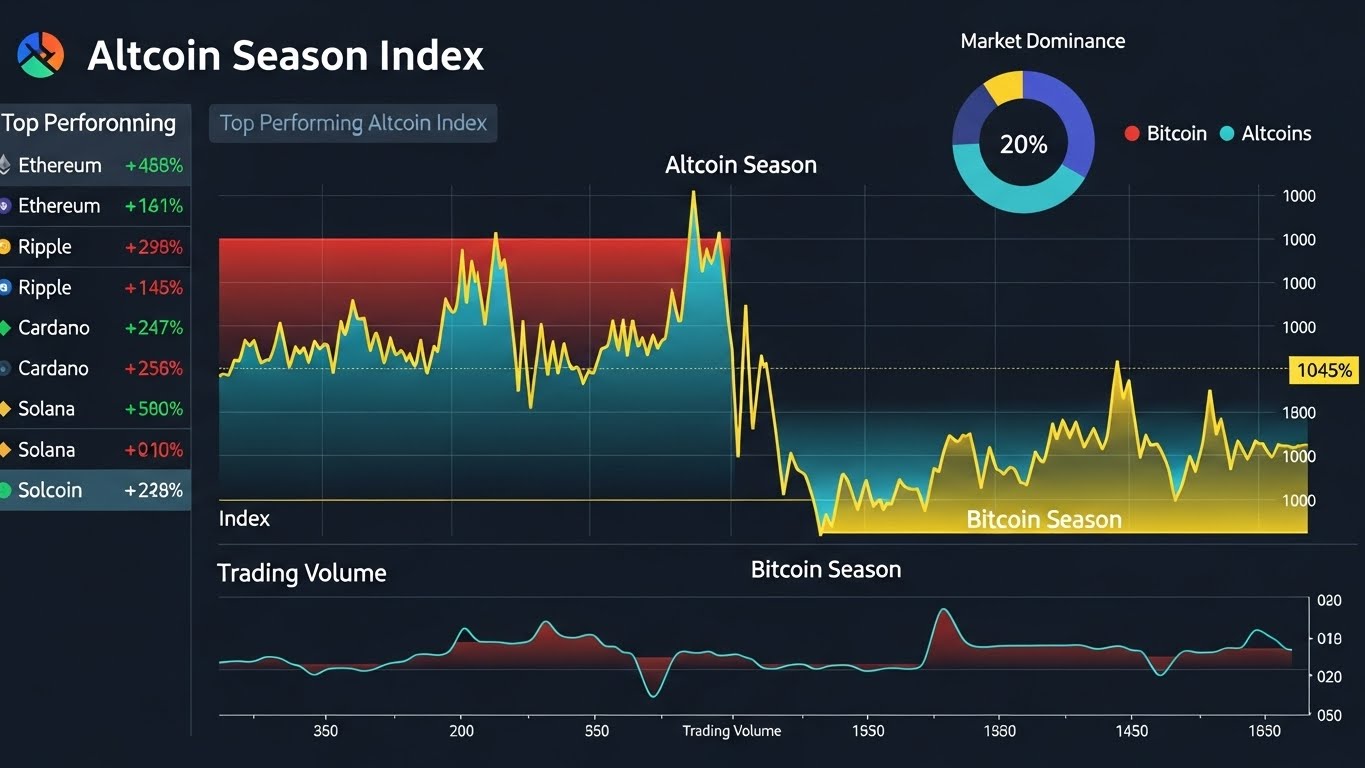
Defensive positioning does not require abandoning conviction. It involves aligning risk with market conditions. Increasing exposure to Bitcoin or stable assets during periods of high dominance can preserve capital while maintaining optionality for future rotations. Such strategies emphasize preservation over aggressive growth when conditions are unfavorable.
Preparing for the Next Altcoin Cycle
Periods of low Altcoin Season Index readings are often the best times to prepare for the next cycle. Research, accumulation at favorable valuations, and patience can position investors ahead of renewed interest. Historically, altcoin rallies reward those who prepared during quieter periods. Viewing current conditions as preparation rather than punishment reframes the experience and encourages strategic thinking.
The Broader Market Context
Macroeconomic Influences on Dominance
Global economic conditions influence cryptocurrency markets more than ever. Interest rates, inflation expectations, and risk appetite all affect capital allocation. In uncertain macro environments, Bitcoin often benefits as the perceived safer crypto asset. Understanding these influences provides additional context for why the Altcoin Season Index remains suppressed.
Institutional Behavior and Market Structure
Institutional participation has reinforced Bitcoin’s dominance. Large players often prefer assets with regulatory clarity and liquidity. This preference concentrates capital and delays broader market rotations until confidence expands. As institutional strategies evolve, their impact on altcoin performance may gradually change.
Is Bitcoin Dominance Really Crushing Your Portfolio?
Measuring Performance Objectively
The perception that Bitcoin dominance is crushing a portfolio often depends on benchmarks. Comparing altcoin performance solely against Bitcoin can exaggerate frustration. Evaluating performance against individual goals and time horizons offers a more balanced perspective. Short-term underperformance does not necessarily indicate long-term failure.
Opportunity Cost Versus Long-Term Vision
Opportunity cost is real in Bitcoin-dominant phases, but so is the potential for outsized gains when rotations occur. Investors must decide whether their strategy prioritizes short-term relative performance or long-term exposure to innovation. Clarifying this vision helps reduce stress during unfavorable conditions.
Conclusion
The Altcoin Season Index stalling at 17 is a clear signal that Bitcoin dominance currently defines the market landscape. While this environment can be challenging for altcoin-heavy portfolios, it is not unusual nor permanent. Bitcoin dominance reflects investor preference for liquidity and perceived safety during specific phases of the market cycle, often setting the stage for future rotations.
Rather than viewing this period as destructive, investors can treat it as an opportunity for reflection, portfolio optimization, and preparation. Understanding market cycles, managing risk, and maintaining discipline are essential to navigating these phases successfully. Bitcoin dominance may feel crushing in the moment, but history suggests it is only one chapter in the broader story of crypto market evolution.
FAQs
Q: What does it mean when the Altcoin Season Index is at 17?
An Altcoin Season Index reading of 17 means that only a small percentage of altcoins are outperforming Bitcoin over the measured period. This indicates a Bitcoin-dominant market where capital is concentrated in Bitcoin rather than spread across alternative cryptocurrencies.
Q: Does high Bitcoin dominance mean altcoins will keep falling?
High Bitcoin dominance does not guarantee continued declines in altcoins, but it does suggest that most altcoins may underperform Bitcoin for a period. Market cycles eventually shift, and dominance can decrease once confidence and risk appetite return.
Q: Should I sell my altcoins when Bitcoin dominance is high?
Selling altcoins solely because Bitcoin dominance is high may not align with long-term strategies. Instead, investors should evaluate fundamentals, risk tolerance, and time horizons. Strategic rebalancing can be more effective than reactive selling.
Q: How long do Bitcoin-dominant phases usually last?
The duration of Bitcoin-dominant phases varies depending on market conditions, macroeconomic factors, and investor sentiment. Some phases last months, while others extend longer. Recognizing that these periods are cyclical helps maintain perspective.
Q: Can a low Altcoin Season Index be a buying opportunity?
Yes, a low Altcoin Season Index can present accumulation opportunities for investors with a long-term outlook. Historically, some of the strongest altcoin rallies began after prolonged periods of underperformance, rewarding those who prepared in advance.
