


The cryptocurrency market is once again witnessing a familiar yet powerful trend: Bitcoin dominance is climbing steadily while altcoins continue to lag near multi-year lows. This shift has sparked intense discussion among traders, investors, and analysts, as it often signals a broader change in market sentiment and capital allocation, which measures Bitcoin’s share of the total cryptocurrency market capitalization, has historically acted as a key indicator of risk appetite and confidence within the digital asset space.
As Bitcoin strengthens its position, many alternative cryptocurrencies struggle to regain momentum, leading to a widening performance gap. This phenomenon is not new, but its persistence and timing have made it particularly significant. In the current market cycle, macroeconomic uncertainty, regulatory developments, and evolving investor behavior are all contributing to the growing divergence between Bitcoin and altcoins.
Understanding why Bitcoin dominance climbs as altcoins lag near multi-year lows is essential for anyone navigating the crypto market. The impact on different sectors of the crypto ecosystem, and what it could mean for the future. By examining these factors in detail, readers can gain a clearer perspective on where the market stands and how it may evolve.
Understanding Bitcoin Dominance and Its Market Significance
Bitcoin dominance represents the percentage of total cryptocurrency market capitalization that belongs to Bitcoin alone. When Bitcoin dominance rises, it indicates that capital is flowing into Bitcoin faster than into altcoins, or that altcoins are losing value relative. This metric has become a cornerstone of crypto market analysis, offering insights into investor behavior and overall market risk tolerance.
Historically, periods of rising Bitcoin dominance have coincided with market uncertainty or bearish conditions. Investors often view Bitcoin as the safest asset in the crypto space due to its longevity, decentralization, and widespread recognition. As a result, when confidence wanes, capital tends to rotate out of smaller, riskier altcoins and into Bitcoin.
In contrast, declining usually signals increased appetite for risk, with investors seeking higher returns in altcoins. The current trend, where Bitcoin dominance climbs as altcoins lag near multi-year lows, suggests a cautious market environment where capital preservation takes precedence over speculative gains.
Why Bitcoin Dominance Is Rising in the Current Cycle
Several interconnected factors are driving the rise in . One of the most significant is macroeconomic uncertainty. Global financial markets remain sensitive to inflation trends, interest rate policies, and geopolitical tensions. In such conditions, investors often gravitate toward assets perceived as more stable, and within crypto, Bitcoin holds that status.
Another major factor is institutional involvement. Large investors and institutions tend to favor Bitcoin due to its liquidity, regulatory clarity relative to altcoins, and established infrastructure. This influx of institutional capital strengthens Bitcoin’s market position while leaving many altcoins underfunded and vulnerable.
Regulatory scrutiny also plays a role. As governments and regulators focus more closely on the crypto industry, altcoins often face greater uncertainty due to questions around classification, compliance, and use cases. widely recognized as a decentralized digital commodity, benefits from comparatively clearer regulatory standing. This dynamic further reinforces the trend climbs as altcoins lag near multi-year lows.
Altcoins Struggling Near Multi-Year Lows
While consolidates strength, many altcoins are trading at levels not seen in years. This underperformance spans multiple categories, including Layer 1 blockchains, decentralized finance tokens, and even some established projects that once led previous bull markets. The reasons behind this struggle are both structural and psychological.
From a structural perspective, the altcoin market has become increasingly crowded. Thousands of tokens compete for attention and capital, diluting investor interest. Many projects launched during previous bull cycles have failed to deliver sustained innovation or adoption, leading to declining confidence and valuations.
Psychologically, prolonged underperformance creates a negative feedback loop. As prices fall, investor enthusiasm wanes, reducing trading volume and liquidity. This makes it harder for altcoins to recover, especially in a market environment dominated by. The result is a scenario where altcoins lag near multi-year lows while Bitcoin continues to attract capital.
Historical Patterns of Bitcoin Dominance Cycles
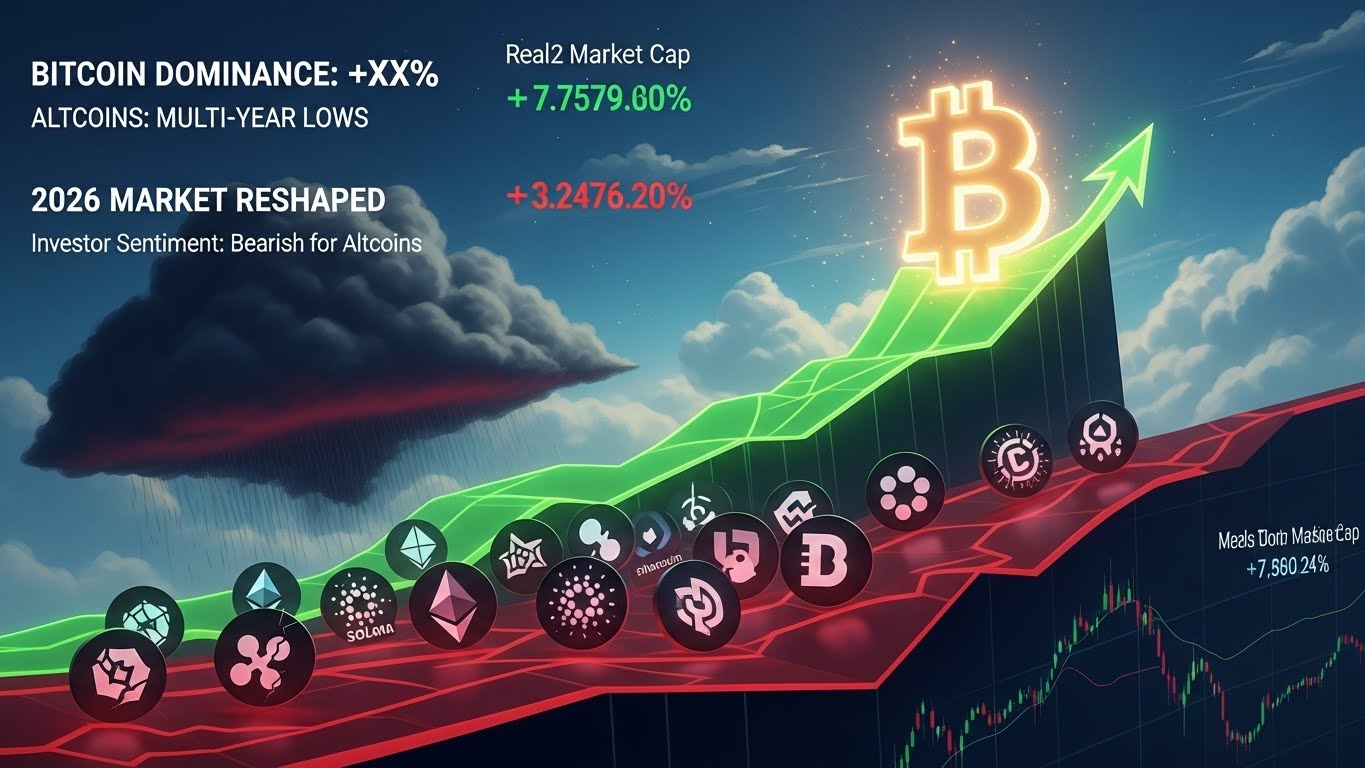
Looking back at previous market cycles provides valuable context for the current trend, has historically moved in waves, rising during bear markets and falling during altcoin seasons. After major market corrections, Bitcoin often reasserts its dominance as investors seek safety and reassess risk.
In past cycles, extended periods of high eventually gave way to altcoin rallies once confidence returned and capital rotated back into higher-risk assets. However, the timing and scale of these transitions varied widely, influenced by broader economic conditions and technological developments.
The present cycle shows similarities to earlier periods but also notable differences. The crypto market is more mature, with greater institutional participation and regulatory oversight. These factors may prolong the phase where Bitcoin dominance climbs as altcoins lag near multi-year lows, altering the traditional rhythm of market cycles.
Investor Sentiment and Capital Rotation Dynamics
Investor sentiment plays a central role in shaping market trends. When optimism is high, traders are more willing to allocate funds to altcoins in pursuit of outsized returns. When sentiment turns cautious, capital flows back into. The current environment reflects heightened caution, with many investors prioritizing capital preservation.
Capital rotation within the crypto market is not random. It follows perceived risk-reward balances. Bitcoin’s established network, limited supply, and strong brand recognition make it the default choice during uncertain times. Altcoins, especially those with weaker fundamentals or unclear use cases, suffer as a result.
This dynamic explains why climbs as altcoins lag near multi-year lows. It is not necessarily a rejection of innovation but rather a recalibration of risk exposure. Investors are waiting for clearer signals before re-entering the altcoin market in a meaningful way.
Impact on DeFi, NFTs, and Emerging Crypto Sectors
The rise in Bitcoin dominance has had a pronounced impact on emerging crypto sectors such as decentralized finance and non-fungible tokens. Many DeFi protocols and NFT platforms rely on strong altcoin performance to attract users and liquidity. When altcoins struggle, activity in these sectors often slows.
In the DeFi space, lower token valuations can reduce incentives for participation, such as yield farming and liquidity provision. This leads to reduced total value locked and diminished innovation. Similarly, NFT markets often experience declining transaction volumes during periods of altcoin weakness, as speculative interest fades.
Despite these challenges, the underlying technology continues to evolve. Builders and developers remain active, focusing on long-term utility rather than short-term price action. While the current phase where Altcoins lag near multi-year lows may be difficult, it also serves as a period of consolidation and refinement for emerging sectors.
Bitcoin’s Role as a Safe Haven in the Crypto Market
Reputation as a safe haven within the crypto ecosystem is a key reason behind its growing dominance. Unlike many altcoins, Bitcoin’s value proposition is straightforward: a decentralized, scarce digital asset resistant to censorship and inflation. This simplicity resonates strongly during times of uncertainty. As global markets face volatility, compared to digital gold. Its fixed supply and transparent monetary policy appeal to investors seeking protection against fiat currency devaluation. This perception strengthens demand and reinforces Bitcoin’s leading position.
When Bitcoin dominance climbs as altcoins lag near multi-year lows, it reflects a broader narrative of trust. Investors trust Bitcoin to weather market storms better than most alternative assets. This trust is built on years of network security, adoption, and resilience.
What This Trend Means for Traders and Long-Term Investors
For traders, rising dominance often signals reduced opportunities in the altcoin market. Volatility may decline, and speculative plays become riskier. Many traders adjust their strategies accordingly, focusing more on Bitcoin or stable assets. Long-term investors, however, may view the situation differently. Periods when altcoins lag near multi-year lows can present opportunities for accumulation, provided the projects have strong fundamentals. Historically, some of the best-performing altcoins were accumulated during times of widespread pessimism. Understanding the broader context is crucial. The fact that dominance climbs as altcoins lag near multi-year lows does not necessarily mean altcoins are obsolete. Instead, it highlights the cyclical nature of the market and the importance of patience and disciplined analysis.
Potential Catalysts That Could Shift Market Dynamics
While the current trend favors Bitcoin, several catalysts could eventually alter the balance. Technological breakthroughs, such as scalability improvements or successful real-world applications, could reignite interest in altcoins. Regulatory clarity may also boost confidence in specific sectors.
Macroeconomic changes, including shifts in monetary policy, could influence investor risk appetite. If conditions become more favorable, capital may rotate back into altcoins in search of higher returns. Additionally, renewed retail participation could drive momentum across the broader market. Until such catalysts emerge, the prevailing trend remains clear. Bitcoin dominance climbs as altcoins lag near multi-year lows, reflecting a cautious yet strategic market environment.
Long-Term Implications for the Crypto Ecosystem
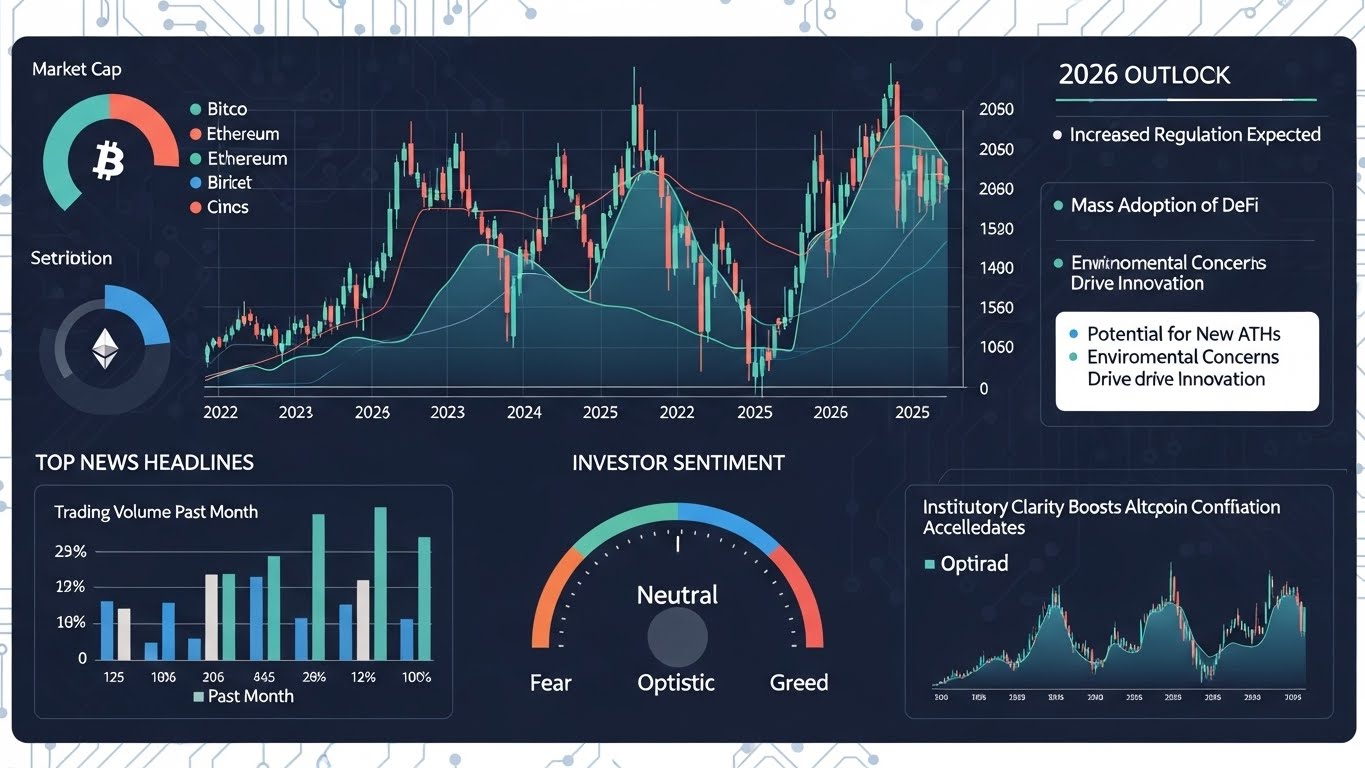
The persistence of high Bitcoin dominance has long-term implications for the crypto ecosystem. It reinforces Bitcoin’s role as the foundation of the market while encouraging altcoin projects to focus on delivering real value rather than hype-driven growth.
This environment may ultimately strengthen the industry. Projects that survive prolonged downturns often emerge more resilient and innovative. Developers are incentivized to build sustainable solutions that can withstand market cycles. As the ecosystem matures, the relationship between Bitcoin and altcoins may evolve. However, the current phase serves as a reminder of position and the challenges altcoins face in maintaining relevance during uncertain times.
Conclusion
The trend where Bitcoin dominance climbs as altcoins lag near multi-year lows reflects a market defined by caution, consolidation, and strategic capital allocation. Driven by macroeconomic uncertainty, institutional preference, and regulatory considerations, Bitcoin continues to assert its leadership within the crypto space.
While altcoins struggle, this phase is not necessarily a signal of decline but rather part of a broader market cycle. Understanding these dynamics allows investors and enthusiasts to navigate the crypto landscape with greater clarity. As conditions evolve, the balance between Bitcoin and altcoins will continue to shift, shaping the future of digital assets.
FAQs
Q: Why does Bitcoin dominance climb when markets become uncertain?
Dominance often climbs during uncertain markets because investors view Bitcoin as the most established and secure asset in the crypto space. As risk appetite decreases, capital flows away from speculative altcoins and into Bitcoin, increasing its share of total market capitalization.
Q: Does high Bitcoin dominance mean altcoins are no longer relevant?
High Bitcoin dominance does not mean altcoins are irrelevant. It usually reflects a temporary phase where investors prioritize safety over risk. Many altcoins continue to develop technology and use cases that may gain attention when market conditions improve.
Q: How long can altcoins lag near multi-year lows?
Altcoins can lag near multi-year lows for extended periods, especially during prolonged bearish or uncertain market conditions. The duration depends on factors such as macroeconomic trends, technological progress, and changes in investor sentiment.
Q: Can rising Bitcoin dominance be bullish for the overall crypto market?
Rising dominance can be neutral or even positive in the long term. It often signals consolidation and capital preservation, which can lay the groundwork for healthier market growth once confidence returns.
Q: What should investors consider during periods of high Bitcoin dominance?
During periods of high Bitcoin dominance, investors should consider their risk tolerance, investment horizon, and project fundamentals. Focusing on quality assets and maintaining a long-term perspective can help navigate market volatility more effectively.
