

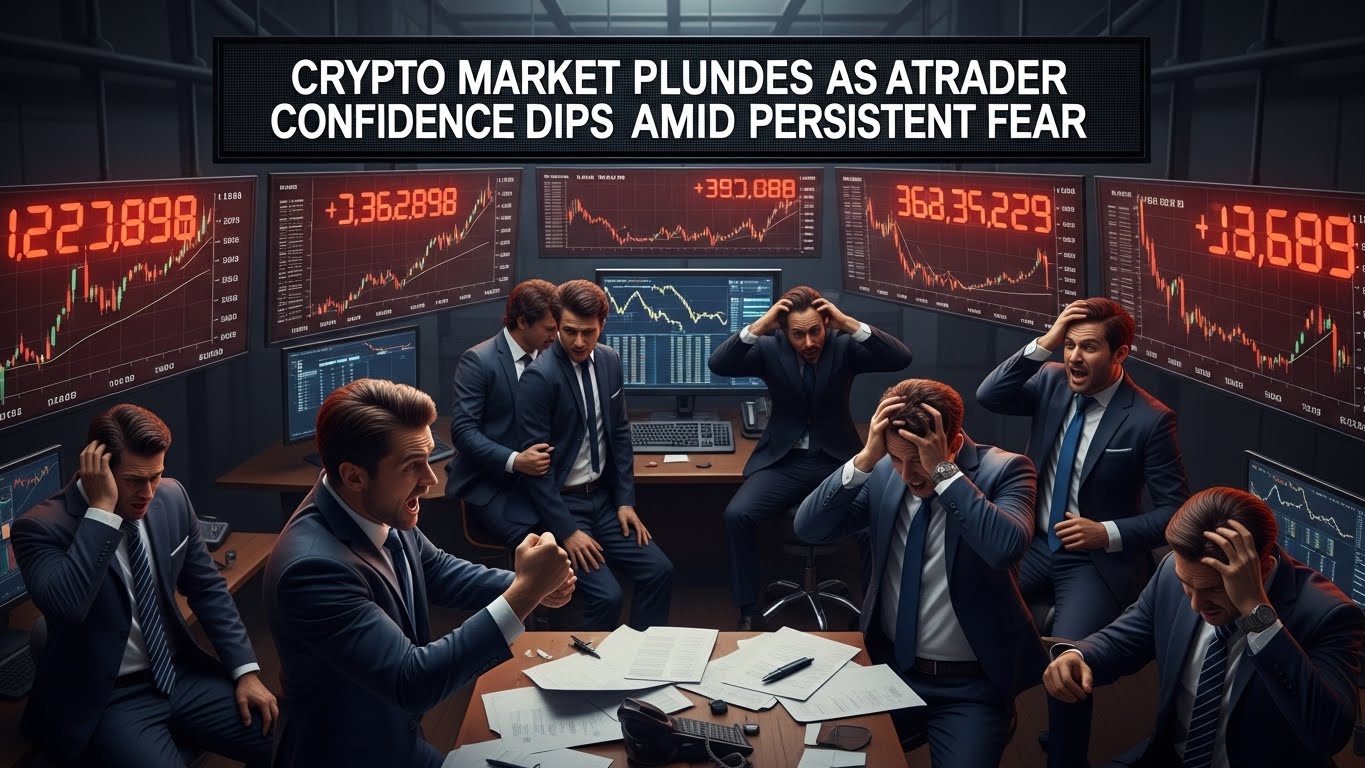
The crypto market has entered another turbulent phase as prices across major digital assets slide sharply, reflecting a noticeable drop in trader confidence amid persistent fear. Toward the end of the year, market participants were hoping for stabilization and renewed momentum, yet the opposite scenario has unfolded. Red candles dominate charts, sentiment indicators lean heavily toward fear, and discussions across trading communities reveal growing uncertainty about near-term direction. The crypto market plunge is not the result of a single catalyst but rather the accumulation of macroeconomic pressure, fading risk appetite, and psychological exhaustion among traders.
Unlike earlier years, when sudden crashes were often driven by isolated events, the current downturn feels slower and more pervasive. Traders are increasingly cautious, liquidity has thinned, and even traditionally resilient assets are struggling to maintain key support levels. Persistent fear has become a defining feature of this phase, shaping behavior and amplifying volatility. Understanding why the crypto market is plunging requires a deeper look at sentiment dynamics, macro forces, and structural changes within the digital asset ecosystem.
This article explores the reasons behind the crypto market plunge, how declining trader confidence is influencing price action, and what persistent fear means for both short-term traders and long-term investors. By examining sentiment indicators, market psychology, and broader economic conditions, we aim to provide a comprehensive view of the current crypto environment and what may come next.
Crypto Market Plunge and the Return of Fear-Dominated Sentiment
The crypto market plunge has coincided with a sharp deterioration in sentiment. Measures of market psychology show fear dominating decision-making, with optimism noticeably absent. Traders who once rushed to buy dips are now hesitant, preferring to preserve capital rather than chase potential rebounds. This shift in behavior has created a feedback loop where declining confidence fuels selling pressure, which in turn reinforces fear.
Persistent fear differs from short-lived panic. Instead of sudden capitulation followed by relief rallies, the current environment is characterized by prolonged caution. Traders are no longer reacting impulsively to single headlines but are instead reassessing their exposure in light of broader uncertainty. This change explains why the crypto market plunge has felt grinding rather than explosive, wearing down confidence over time.
The emotional tone of the market matters because cryptocurrencies remain highly sentiment-driven. When fear becomes entrenched, even neutral news can be interpreted negatively, increasing volatility and pushing prices lower.
Declining Trader Confidence Across Major Crypto Assets
Trader confidence is a crucial pillar of market stability, and its erosion has been evident across the crypto market. Assets that previously enjoyed strong speculative interest are now seeing reduced trading volumes and lower participation from retail investors. This decline in activity suggests that many traders are either sidelined or exiting positions altogether.
One reason for this confidence dip is fatigue. Extended periods of volatility without clear directional trends have exhausted traders, making them less willing to take risks. In addition, repeated failed recoveries have undermined belief in quick rebounds, encouraging a more defensive stance.
The crypto market plunge reflects this psychological shift. When confidence weakens, support levels lose significance, and price movements become more reactive to selling pressure. This dynamic has contributed to sharper declines even in the absence of dramatic news events.
Macro Uncertainty Weighing on the Crypto Market
Macroeconomic uncertainty continues to cast a long shadow over the crypto market. Global financial conditions remain tight, and risk assets are under pressure as investors reassess their exposure. Cryptocurrencies, often categorized alongside high-risk assets, are particularly sensitive to changes in liquidity and monetary policy expectations.
Inflation concerns, interest rate uncertainty, and geopolitical tensions all contribute to a cautious investment climate. In such an environment, capital tends to flow away from speculative assets toward perceived safety. This shift has intensified the crypto market plunge, as traders reduce exposure to digital assets in favor of cash or lower-risk alternatives. Persistent fear within the crypto market is therefore not isolated but interconnected with broader economic sentiment. As long as macro uncertainty remains unresolved, confidence is likely to recover slowly rather than abruptly.
Market Psychology and the Amplification of Fear
Market psychology plays a central role in magnifying price movements during periods of stress. In the current crypto market plunge, fear has become self-reinforcing. As prices fall, traders anticipate further declines, leading them to sell preemptively. This behavior accelerates downward momentum and validates bearish expectations.
Social sentiment further amplifies this effect. Discussions dominated by pessimism can influence individual decision-making, even among experienced traders. The collective focus shifts from opportunity to risk avoidance, reducing buying interest and deepening losses. This psychological environment explains why persistent fear is more damaging than momentary panic. It discourages participation and prolongs downturns, making recovery more challenging.
Liquidity Conditions and Their Impact on Price Stability
Liquidity is a critical factor in maintaining orderly markets, and its reduction has contributed significantly to the crypto market plunge. Lower liquidity means fewer buyers are available to absorb selling pressure, resulting in sharper price swings. As trader confidence dips, market makers become more cautious, further thinning order books.
Reduced liquidity also increases the impact of large trades, amplifying volatility. Even modest sell orders can trigger cascading declines when liquidity is scarce. This dynamic has been evident across multiple digital assets, reinforcing the perception of fragility within the crypto market. Persistent fear exacerbates liquidity issues by discouraging participation. Until confidence improves and trading activity increases, price stability is likely to remain elusive.
The Role of Volatility in Eroding Confidence
Volatility is both a defining feature of cryptocurrencies and a source of anxiety for traders. While volatility can create opportunities, excessive and unpredictable swings often undermine confidence. The current crypto market plunge has been marked by erratic movements that make risk management challenging.
For many traders, the inability to identify clear trends has led to frustration and withdrawal. This reaction further reduces market participation, feeding into the cycle of fear and declining prices. Volatility, in this sense, is not merely a symptom but also a driver of the confidence dip. Understanding this relationship helps explain why the crypto market struggles to stabilize during fear-dominated phases. Stability requires not only positive catalysts but also a reduction in erratic price behavior.
Structural Changes in the Crypto Market Landscape
The crypto market of today is structurally different from earlier cycles. Increased institutional involvement, regulatory scrutiny, and integration with traditional finance have altered how digital assets respond to stress. While these changes bring maturity, they also introduce new vulnerabilities.
Institutional participants often operate with strict risk controls, leading them to reduce exposure quickly during downturns. This behavior can accelerate sell-offs and contribute to the crypto market plunge. At the same time, regulatory uncertainty can amplify fear, as traders worry about potential policy shifts affecting valuations. These structural factors mean that persistent fear may manifest differently than in past cycles, with slower recoveries and more cautious participation.
Short-Term Trading Behavior in a Fear-Driven Market
In a fear-driven environment, short-term trading behavior changes noticeably. Traders prioritize capital preservation over aggressive positioning, leading to reduced leverage and shorter holding periods. This shift can dampen speculative rallies and make rebounds less sustainable.
The crypto market plunge has highlighted this behavior. Attempts at recovery often stall quickly as traders take profits early or exit positions at the first sign of resistance. This pattern reinforces the sense that confidence remains fragile. For active traders, adapting strategies to account for fear-driven dynamics becomes essential. Recognizing when fear dominates can help manage risk and set realistic expectations.
Long-Term Investors and the Test of Conviction
While short-term traders react quickly to sentiment shifts, long-term investors face a different challenge. Persistent fear tests conviction and patience, forcing investors to reassess their thesis. Some view the crypto market plunge as an opportunity to accumulate assets at lower valuations, while others question whether the underlying assumptions still hold.
This divergence in perspective reflects varying time horizons and risk tolerance. Long-term believers often focus on adoption trends and technological development, viewing fear-driven declines as cyclical rather than structural. However, prolonged downturns can still strain confidence, especially if recovery takes longer than anticipated. Understanding this dynamic is key to interpreting market behavior during fear-dominated phases.
Potential Paths Forward for the Crypto Market
The future direction of the crypto market will depend on how fear evolves. A gradual improvement in sentiment, supported by clearer macro signals or positive industry developments, could stabilize prices and restore confidence. Alternatively, continued uncertainty may prolong the downturn, keeping the crypto market under pressure.
Historically, markets have recovered when fear reaches extremes, but timing remains unpredictable. What is clear is that sentiment will continue to play a decisive role. Monitoring confidence indicators and behavioral trends can provide valuable insight into when conditions may begin to shift. The crypto market plunge serves as a reminder that emotional factors are as influential as fundamentals in shaping price action.
Conclusion
The crypto market plunge amid persistent fear reflects a complex interplay of declining trader confidence, macroeconomic uncertainty, and psychological dynamics. Rather than a single dramatic event, the downturn has been driven by sustained caution and risk aversion. Fear has become embedded in market behavior, influencing liquidity, volatility, and participation.
Understanding this environment requires acknowledging both emotional and structural factors. While fear can create challenging conditions, it also lays the groundwork for future recovery once sentiment stabilizes. For traders and investors alike, navigating this phase demands patience, discipline, and a clear understanding of personal risk tolerance. As the crypto market continues to evolve, periods of fear-driven decline remain an inherent part of its journey. Recognizing their causes and implications can help market participants make more informed decisions during uncertain times.
FAQs
Q: Why is the crypto market plunging even without major negative news?
The crypto market is plunging primarily due to declining trader confidence and persistent fear rather than a single headline. Prolonged uncertainty, reduced liquidity, and cautious behavior have combined to push prices lower even in the absence of dramatic events.
Q: How does trader confidence impact crypto prices so strongly?
Trader confidence influences willingness to buy and hold assets. When confidence dips, traders sell more readily and hesitate to enter new positions, amplifying downward pressure and increasing volatility across the crypto market.
Q: What does persistent fear mean for short-term crypto traders?
Persistent fear makes short-term trading more challenging by increasing unpredictability and reducing the likelihood of sustained rallies. Traders often shift toward defensive strategies, focusing on risk management rather than aggressive gains.
Q: Can long-term investors benefit during a crypto market plunge?
Long-term investors may view a crypto market plunge as an opportunity if they believe in the underlying technology and adoption trends. However, persistent fear can still test patience and conviction, making careful evaluation essential.
Q: How can traders assess when fear in the crypto market might ease?
Traders can monitor sentiment indicators, trading volumes, and macroeconomic signals to gauge shifts in confidence. A gradual return of liquidity and reduced volatility often signal that fear may be easing and stability could return.
