

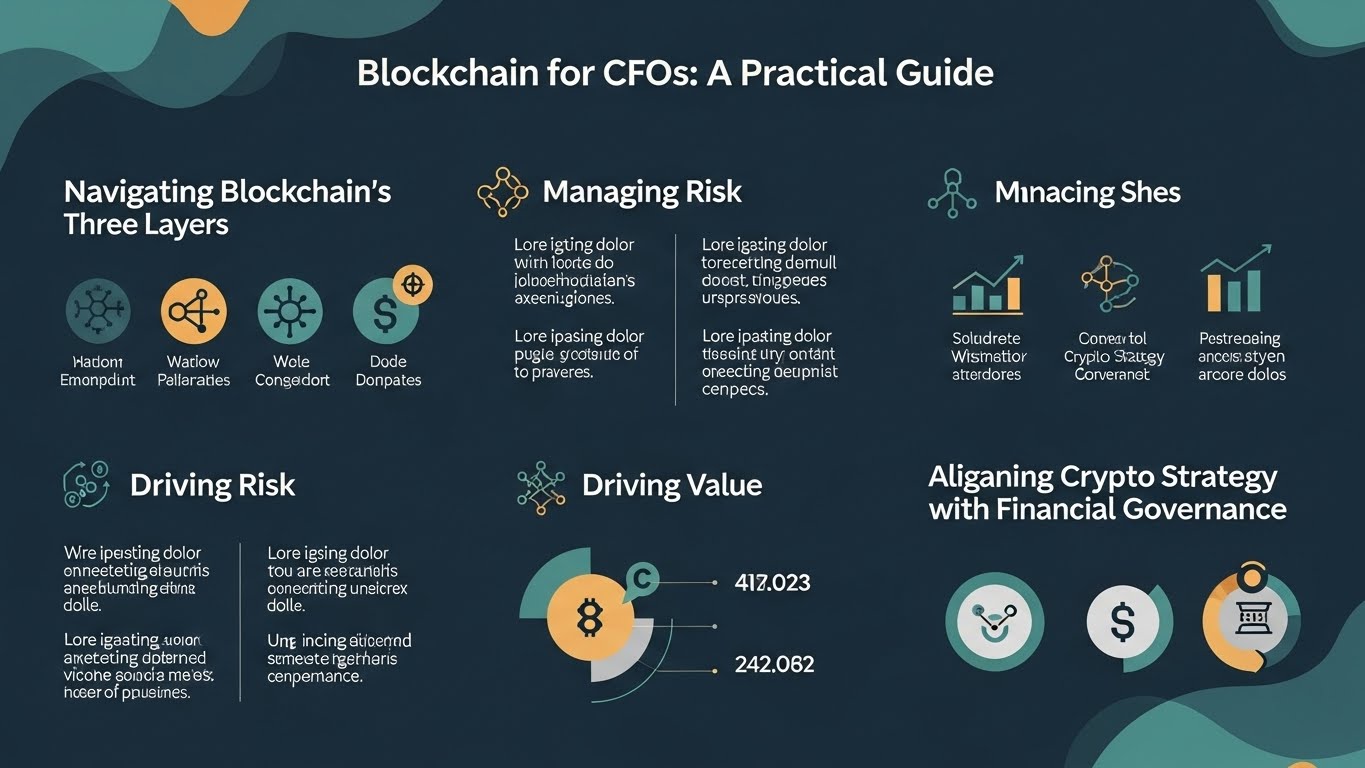
The role of the Chief Financial Officer has evolved dramatically in the digital era, but no transformation has been as complex and consequential as the rise of blockchain and crypto-enabled business models. Today’s CFO is no longer responsible only for balance sheets, forecasting, and compliance. Instead, the modern finance leader is increasingly expected to understand decentralized systems, digital assets, tokenized value, and new forms of financial infrastructure. This shift has given rise to a new strategic framework often described as the Crypto CFO playbook, a structured approach to navigating blockchain’s three layers while maintaining financial discipline.
Blockchain is not a single technology or market. It is a layered ecosystem consisting of foundational infrastructure, application-level protocols, and user-facing financial products. Each layer introduces distinct financial risks, accounting challenges, operational considerations, and strategic opportunities. For CFOs, the challenge is not simply understanding blockchain in theory, but translating its layered architecture into actionable financial decisions that align with corporate objectives.
As organizations increasingly experiment with digital assets, stablecoins, decentralized finance, and tokenized operations, CFOs must bridge the gap between innovation and governance. This article provides an in-depth, finance-focused exploration of blockchain’s three layers and explains how CFOs can navigate them with confidence. By adopting a structured, layered perspective, finance leaders can move beyond uncertainty and position their organizations for sustainable participation in the digital economy.
Why Blockchain Literacy Is Now a CFO Imperative
The Expanding Scope of Financial Leadership
The CFO’s mandate has expanded beyond traditional finance into technology strategy, risk management, and long-term value creation. Blockchain touches each of these areas simultaneously. It affects how value is stored, transferred, recorded, and audited, making it impossible for finance leaders to ignore.
Unlike previous financial technologies, blockchain introduces decentralized ownership and programmable assets. This fundamentally alters how transactions are validated and how trust is established. CFOs who lack blockchain literacy risk misjudging exposure, underestimating compliance requirements, or missing strategic opportunities.
Blockchain as Financial Infrastructure, Not Just Technology
From a finance perspective, blockchain should be viewed as infrastructure rather than a speculative trend. It functions as a settlement layer, a record-keeping system, and a platform for financial automation. Understanding this infrastructure mindset allows CFOs to evaluate blockchain investments with the same rigor applied to enterprise systems or payment networks.
This perspective forms the foundation of effective blockchain financial strategy, ensuring decisions are grounded in operational reality rather than hype.
Understanding Blockchain’s Three-Layer Model
Why the Layered Framework Matters for CFOs
Blockchain ecosystems are often confusing because different participants operate at different layers. Developers may focus on infrastructure, product teams may prioritize applications, and users may only interact with interfaces. CFOs, however, must understand all layers simultaneously because financial exposure exists across the entire stack.
The three-layer model provides a clear framework for analysis. It separates blockchain into the base protocol layer, the application and smart contract layer, and the user-facing financial layer. Each layer presents unique financial considerations that demand tailored governance.
Translating Technical Layers Into Financial Context
For CFOs, the value of the layered model lies in its ability to map technical complexity onto financial oversight. It clarifies where costs are incurred, where revenue is generated, and where risk accumulates. This translation is essential for effective budgeting, accounting, and compliance.
Layer One: Base Blockchain Infrastructure and Financial Exposure

What Layer One Represents
Layer one refers to the foundational blockchain networks that validate transactions and secure data. These networks form the backbone of the crypto ecosystem. From a CFO’s perspective, layer one is comparable to core financial infrastructure such as payment rails or clearing systems.
Layer one assets often involve native tokens that are used to pay transaction fees and secure the network. Holding or transacting with these assets introduces balance sheet implications and valuation challenges.
Financial Risks and Accounting Challenges at Layer One
Exposure at this layer includes price volatility, custody risk, and regulatory uncertainty. CFOs must determine how native tokens are classified, whether as intangible assets, inventory, or financial instruments, depending on jurisdiction and use case.
Additionally, transaction fees can fluctuate significantly, complicating cost forecasting. Effective crypto accounting practices are essential to ensure accurate reporting and compliance.
Strategic Considerations for CFOs
CFOs should treat layer one exposure as infrastructure investment rather than speculative trading. Clear policies around treasury allocation, custody solutions, and impairment testing help mitigate risk. Governance frameworks should define acceptable exposure levels and approval processes for interacting with base networks.
Layer Two: Smart Contracts, Protocols, and Operational Finance
Understanding the Application Layer
Layer two encompasses smart contracts, decentralized applications, and protocols built on top of base blockchains. This layer enables programmable finance, automated workflows, and tokenized business logic. For CFOs, it represents the operational heart of blockchain adoption.
Financial activities at this layer include staking, liquidity provision, automated payments, and protocol participation. Each activity has accounting and tax implications that must be carefully assessed.
Revenue, Costs, and Complexity
Unlike traditional systems, smart contracts execute automatically based on predefined rules. This automation can reduce administrative costs but introduces new complexities. Revenue recognition may occur programmatically, and expenses such as protocol fees or rewards may fluctuate.
CFOs must ensure that financial reporting systems can capture on-chain activity accurately. This often requires new tools and internal controls designed for decentralized finance operations.
Risk Management at the Protocol Level
Operational risk at layer two includes smart contract vulnerabilities, governance failures, and counterparty exposure within decentralized systems. CFOs must work closely with legal, technology, and compliance teams to evaluate these risks. A disciplined approach to protocol selection, auditing standards, and contingency planning is essential to protect organizational assets.
Layer Three: User-Facing Products and Financial Strategy
The Interface Between Blockchain and Business Users
Layer three includes wallets, exchanges, payment tools, and financial products that interact directly with users. From a CFO’s perspective, this layer is where blockchain meets revenue models, customer experience, and market adoption. Decisions at this layer influence how customers perceive the organization’s crypto strategy and how value is ultimately captured.
Monetization and Customer Trust
User-facing crypto products introduce new revenue streams but also reputational risk. Pricing models, fee transparency, and asset custody arrangements directly impact customer trust. CFOs must ensure that financial incentives align with long-term brand value. Regulatory compliance is particularly critical at this layer, as consumer protection laws often apply most strongly where users interact directly with financial products.
Financial Governance and Reporting
Layer three activity generates large volumes of transactional data. CFOs must implement systems that aggregate this data into meaningful financial insights. Accurate reporting supports strategic decision-making and ensures compliance with disclosure requirements. This layer often determines whether blockchain initiatives deliver measurable business value.
Integrating the Three Layers Into a Unified CFO Strategy
Breaking Down Organizational Silos
One of the biggest challenges for CFOs is fragmentation. Blockchain initiatives often emerge in innovation teams, separate from finance. A layered framework helps CFOs integrate these efforts into a unified strategy. By aligning policies across all three layers, finance leaders can ensure consistency in risk management, accounting, and performance measurement.
Building a Scalable Financial Operating Model
Scalability is critical as blockchain initiatives grow. CFOs should design operating models that can adapt to increased transaction volumes, new asset types, and evolving regulations. This includes investing in tooling, talent, and cross-functional collaboration. A scalable model ensures that blockchain adoption enhances efficiency rather than creating operational bottlenecks.
Regulatory and Compliance Considerations Across Layers
Navigating an Evolving Regulatory Landscape
Regulation remains one of the most significant uncertainties in crypto finance. Each layer faces different regulatory pressures, from infrastructure oversight to consumer protection. CFOs must stay informed and proactive. A layered understanding helps anticipate where regulatory changes are most likely to impact financial operations.
Compliance as a Strategic Advantage
Rather than viewing compliance as a constraint, CFOs can leverage strong governance as a competitive advantage. Transparent reporting, robust controls, and proactive engagement with regulators build credibility and trust. This approach supports sustainable growth within the crypto finance ecosystem.
Talent, Systems, and Culture for the Crypto CFO
Building the Right Finance Team
Blockchain finance requires new skills. CFOs must invest in talent that understands digital assets, data analytics, and automated systems. Training existing teams is equally important to bridge knowledge gaps. A finance team fluent in blockchain concepts is better equipped to support innovation responsibly.
Technology Infrastructure for Financial Visibility
Traditional ERP systems are often ill-equipped to handle on-chain data. CFOs should evaluate specialized tools that integrate blockchain analytics with financial reporting. This infrastructure provides the visibility needed to manage complex, real-time financial activity.
Measuring Success in Blockchain Initiatives
Financial KPIs That Matter
Success metrics should align with strategic objectives rather than short-term market movements. CFOs should focus on cost efficiency, revenue sustainability, risk-adjusted returns, and operational resilience. These metrics provide a balanced view of performance across blockchain’s three layers.
Long-Term Value Creation
Ultimately, the CFO’s role is to steward long-term value. Blockchain initiatives should be evaluated based on their contribution to strategic goals, not speculative gains. A disciplined, layered approach supports informed decision-making over time.
Conclusion
The Crypto CFO playbook is no longer optional. As blockchain reshapes financial infrastructure, CFOs must navigate its three layers with clarity, discipline, and strategic intent. By understanding the financial implications of base infrastructure, application-level protocols, and user-facing products, finance leaders can manage risk while unlocking new opportunities.
Blockchain’s complexity demands a structured approach, but it also offers powerful tools for efficiency, transparency, and innovation. CFOs who embrace a layered framework position themselves not just as financial stewards, but as strategic leaders in the digital economy.
FAQs
Q: Why is understanding blockchain’s three layers important for CFOs?
Understanding blockchain’s three layers helps CFOs identify where financial risk, cost, and value are created. Each layer presents unique accounting, compliance, and strategic challenges that require tailored financial oversight.
Q: How does the Crypto CFO playbook differ from traditional finance strategy?
The Crypto CFO playbook integrates decentralized systems, digital assets, and automated finance into traditional governance frameworks. It emphasizes real-time data, layered risk management, and cross-functional collaboration.
Q: What are the biggest financial risks CFOs face in blockchain adoption?
Key risks include asset volatility, regulatory uncertainty, smart contract vulnerabilities, and data transparency challenges. A layered approach helps CFOs manage these risks systematically.
Q: How can CFOs ensure compliance across blockchain initiatives?
CFOs can ensure compliance by aligning policies across all layers, investing in proper reporting tools, and staying engaged with evolving regulations. Proactive governance reduces uncertainty and builds trust.
Q: What skills should finance teams develop for blockchain finance?
Finance teams should develop skills in digital asset accounting, data analytics, and blockchain fundamentals. These capabilities enable accurate reporting and informed decision-making in decentralized environments.
